

Comparing types of glass for shower doors can feel like ordering coffee from a menu that also lists cup sizes and dishwasher settings. A good-looking sample doesn’t explain the whole order.
This guide helps you pick the look, compare everyday trade-offs, and settle the specifications before signing.
Compare six glass options against your main priority, then sort out safety, thickness, and treatments before matching glass, opening, and hardware.
Read framed vs frameless shower doors first if you’re still deciding on construction, then return to compare the glass.
Shower Door Glass Types at a Glance
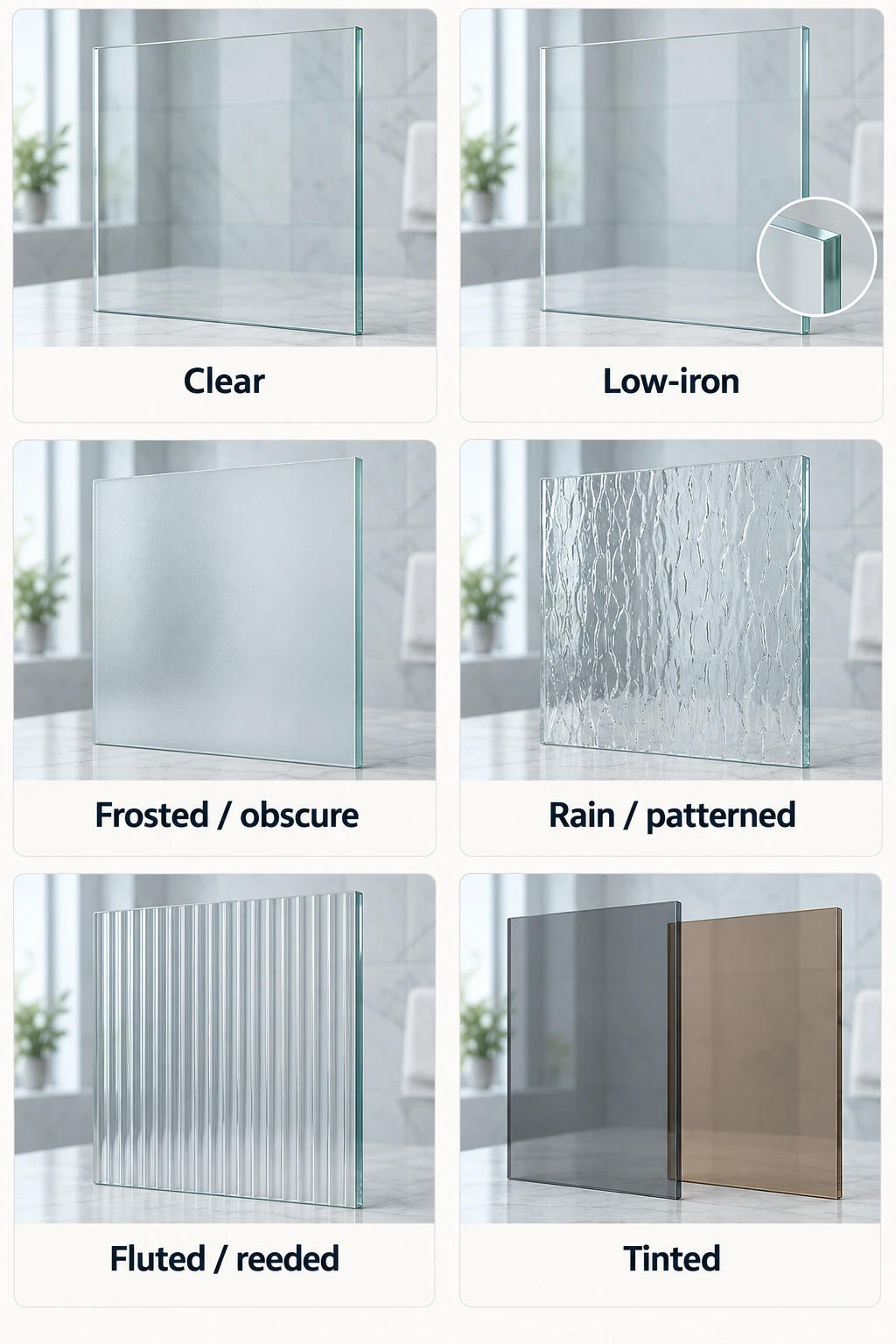
The main shower door glass types are clear, low-iron, frosted, rain, fluted, and tinted. Some labels can combine, so compare types of glass for shower doors by what each describes.
Every U.S. shower-door and enclosure panel must use compliant safety glazing under 16 CFR Part 1201, whatever its appearance. Specify tempered safety glass or a system-approved laminated safety product. Ordinary annealed glass is not a substitute.
For a kit that includes glass, choose its approved options and keep the supplied glass and hardware together.
Clear and Low-Iron Glass: Compare the Face and the Edge
Clear is the picture-window choice among types of glass for shower doors, keeping tile and the interior in view. Compare low-iron against white tile, pale stone, or grout when a neutral appearance matters.
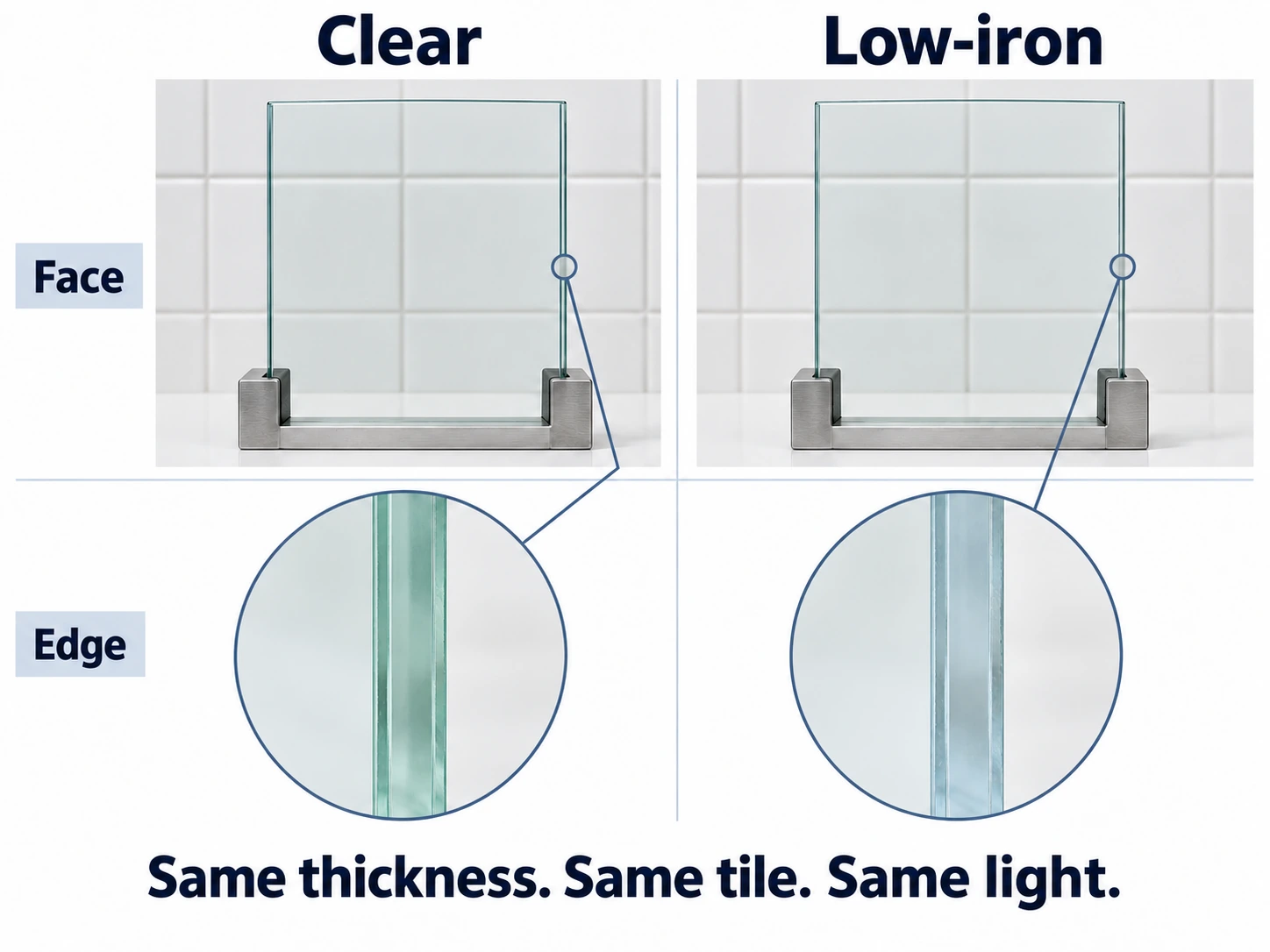
Guardian’s low-iron glass explanation ties lower iron content to less green coloration, a color benefit when comparing types of glass for shower doors. It doesn’t establish easier cleaning.
Hold equal-thickness samples against your tile and look at both the face and edge under the same light. As Pilkington explains, thicker glass makes the green edge tint more noticeable.
Pay for the sample color you prefer when choosing types of glass for shower doors, keeping its identity with the quote instead of relying on an unidentified photo.
Frosted, Rain, and Fluted Glass: Identify the Actual Pattern
Start with an identified obscured sample for privacy. Frosted, rain, and fluted are different looks among types of glass for shower doors; like curtains with different weaves, their names alone don’t tell you how much they screen.
Walker’s acid-etched range includes Satin and Velour finishes with different opacity characteristics. Glaz-Tech’s pattern catalog lists Rain, Reeded, and other patterns separately, with availability tied to the product and location.
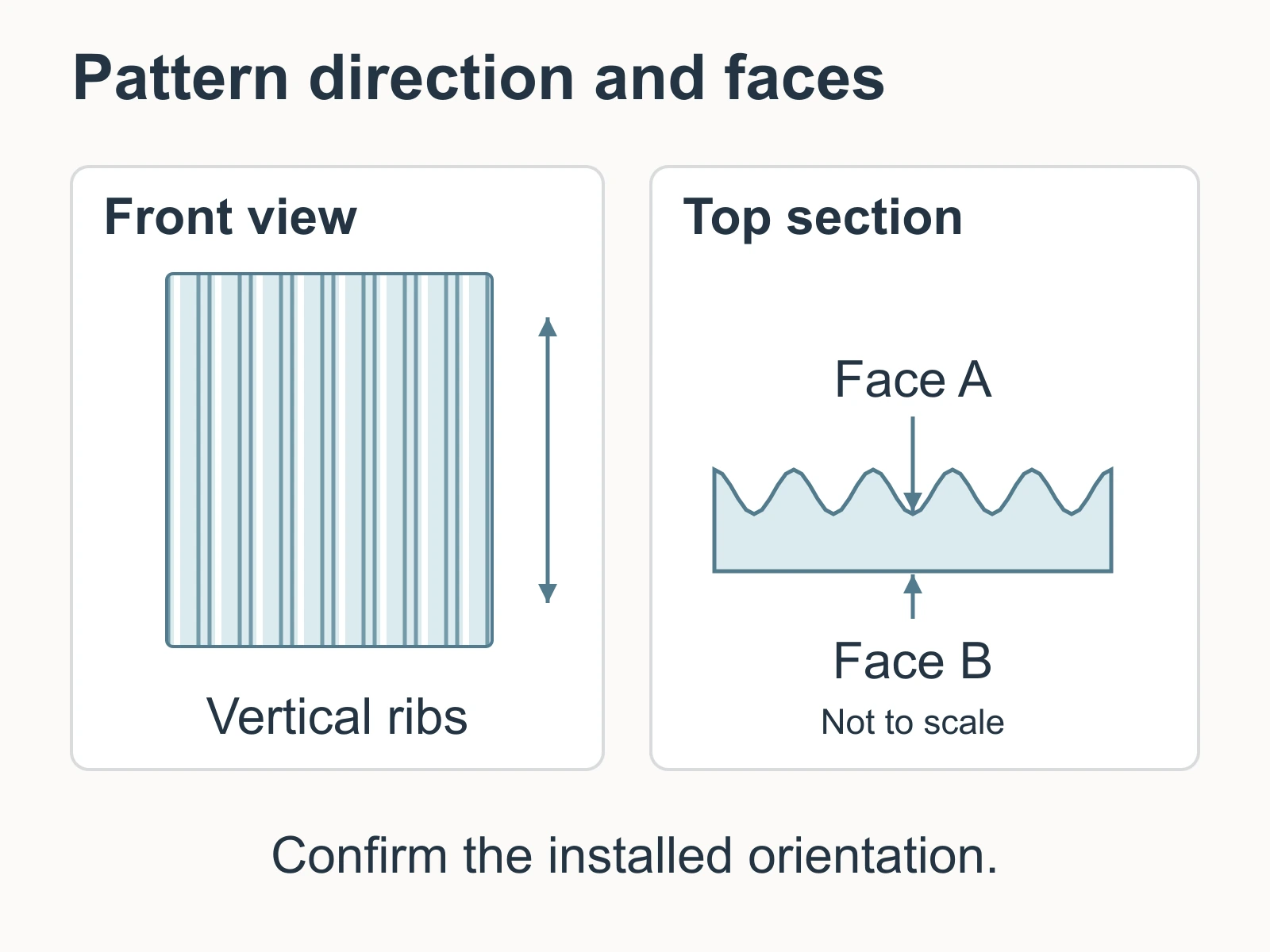
With textured types of glass for shower doors, record the pattern and installed orientation, with the supplier identifying both surfaces. The name alone doesn’t identify the shower-facing side.
Compare rib spacing, depth, direction, and product code on fluted or reeded samples; the shopping name isn’t a blueprint for dimensions or manufacturing method.
Before choosing the pattern, check a fluted layout against your entry space, panel coverage, and cleaning reach.
Tinted Glass and a Six-Option Comparison Table
Tinted glass adds color to the bathroom’s design; Agalite’s Accent options include Bronze Tint and Gray Tint within its range.
Sunglasses and curtains do different jobs when comparing tinted types of glass for shower doors. Check the sample against tile and fixtures, then assess privacy separately.
Six glass appearances: comparison guide, not measured privacy ratings.
| Option | Look, visibility, and color | Cleaning access to check | Confirm before ordering |
|---|---|---|---|
| Clear | Transparent starting sample | Both faces and lower edges | Exact glass code |
| Low-iron | Reduced green coloration | Same access checks as clear | Matching-thickness sample |
| Frosted/obscure | Named finish determines screening | Actual treated surface | Finish and face orientation |
| Rain/patterned | Identified decorative pattern | Actual textured face and edges | Pattern code and sample |
| Fluted/reeded | Identified rib pattern | Reach around ribs and hardware | Pattern direction and code |
| Tinted | Chosen color; screening unverified | Both faces and fittings | Exact tint and sample |
Use the table to shortlist types of glass for shower doors, remembering that some labels combine. The best glass for shower doors serves your priority, with the combination written on the final glass line item.
Get an itemized clear-glass baseline with identical dimensions and hardware, separating tint, low-iron, pattern, and treatment charges. Compare the quoted dollar difference instead of assuming an upgrade percentage.
Choose Shower Door Glass Options for Your Bathroom
Give your shower door glass options a main job: show the tile, screen the view, or simplify upkeep. Choose that priority before comparing types of glass for shower doors and falling for a pretty sample.
How to Choose Shower Door Glass for Your Main Priority
The best glass for shower doors meets your priority in a compatible system: clear or low-iron for tile visibility, obscured samples for privacy.
For upkeep, choose surfaces you can reach and a care routine you’ll follow, then weigh a named protective treatment. That’s how to choose shower door glass without checking every upgrade box like you’re ordering a fully loaded truck.
Start with your main priority, then check the actual sample or layout.
| Main priority | Start here | Deciding check |
|---|---|---|
| Show the tile | Clear; compare low-iron | Sample against your tile |
| Screen the view | Named obscured samples | Viewing record below |
| Make upkeep manageable | Reachable surfaces and specified care | Access to both faces and edges |
When two types of glass for shower doors meet your main priority, use the second to break the tie, such as comparing color after confirming clarity.
If your cleaning tool can’t reach, rethink the layout before choosing types of glass for shower doors for easy upkeep.
Check Privacy Under the Lighting You Will Use
Customer renovation: choosing frosted glass for privacy
During this renovation, the customer replaced an older framed tub enclosure with a frosted-glass shower enclosure. The example is about the glass choice, not a recommendation to replace your tub.
Rain glass also made the shortlist. Frosted won because the customer wanted privacy and less noticeable everyday marks, without letting grime become the bathroom’s main attraction.
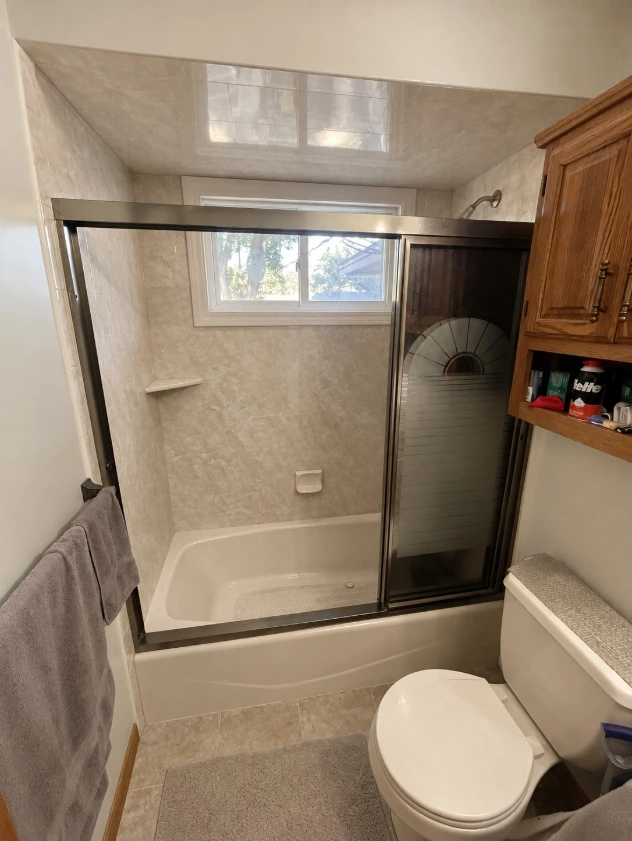
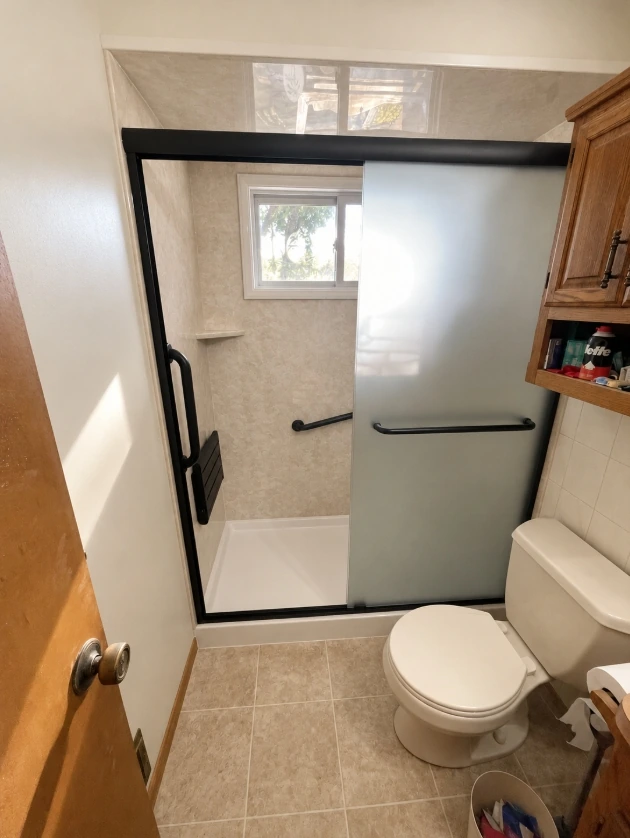
The before photo includes a patterned panel, so this isn’t a clear-versus-frosted test. In the after photo, the door is partly open; the opening on the left is the entrance.
Their choice balanced privacy with the appearance of everyday grime. Less noticeable dirt still needs cleaning; it doesn’t make the surface easier to reach.
Your bathroom supplies the lighting, so compare types of glass for shower doors with an identified sample under your own conditions, using the checks below.
Record the observer’s distance, person-to-glass distance, and backlighting or sidelighting, judging body outlines and finer details separately against your household’s privacy needs.
Record lighting and sample identity when comparing types of glass for shower doors; an unidentified photo can’t settle privacy.
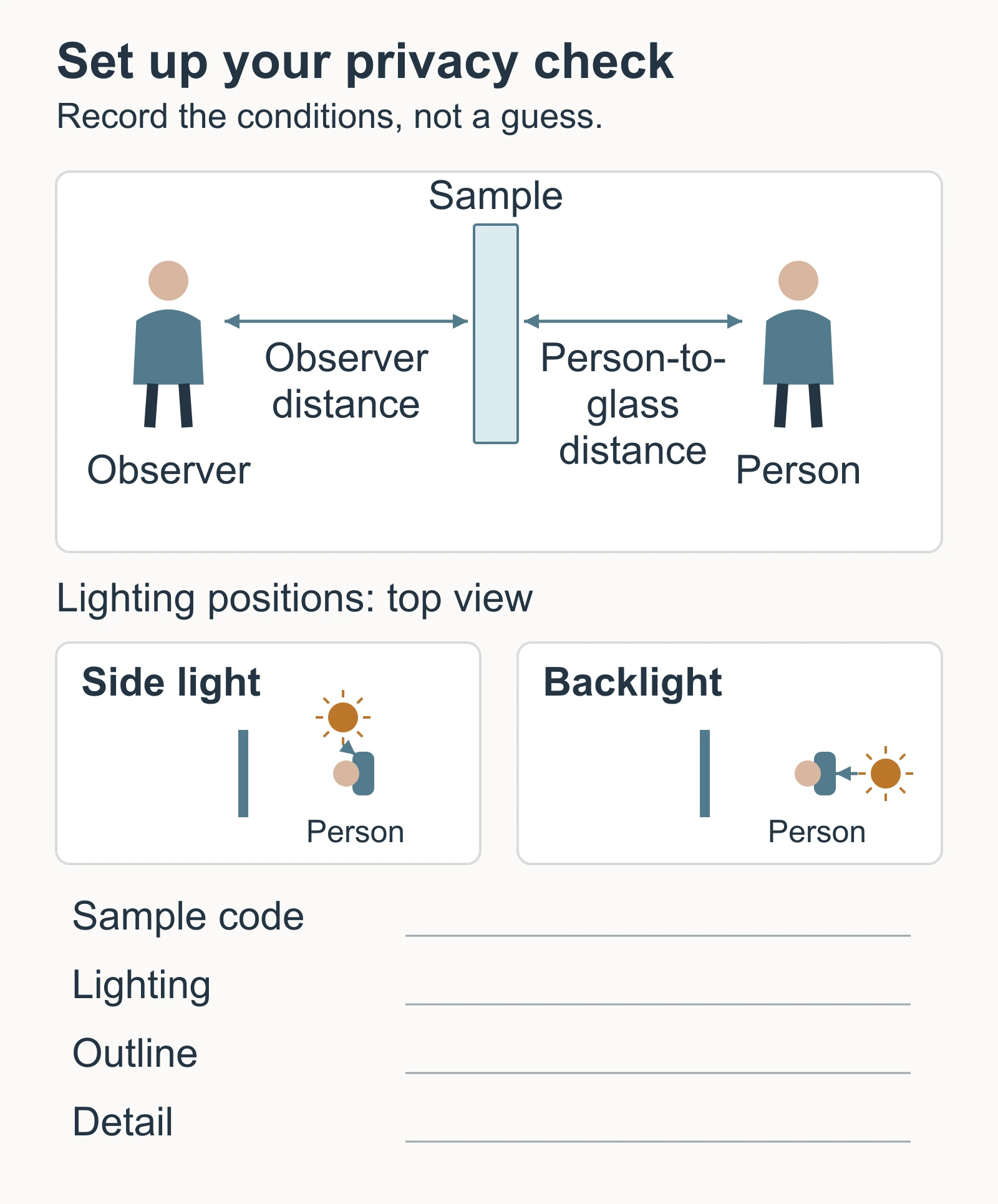
Decide whether recognizable detail from the doorway meets your household’s privacy limit before choosing.
Compare Cleaning Access, Not Just Hidden Water Spots
For easier upkeep, check where your hand and cleaning tool can reach before choosing types of glass for shower doors. Hiding water spots and removing them are different jobs.
EnduroShield’s care FAQ calls for regular cleaning and warns against abrasives and unsuitable chemicals. Even treated types of glass for shower doors need care. An upgrade doesn’t put a tiny housekeeper inside the panel.
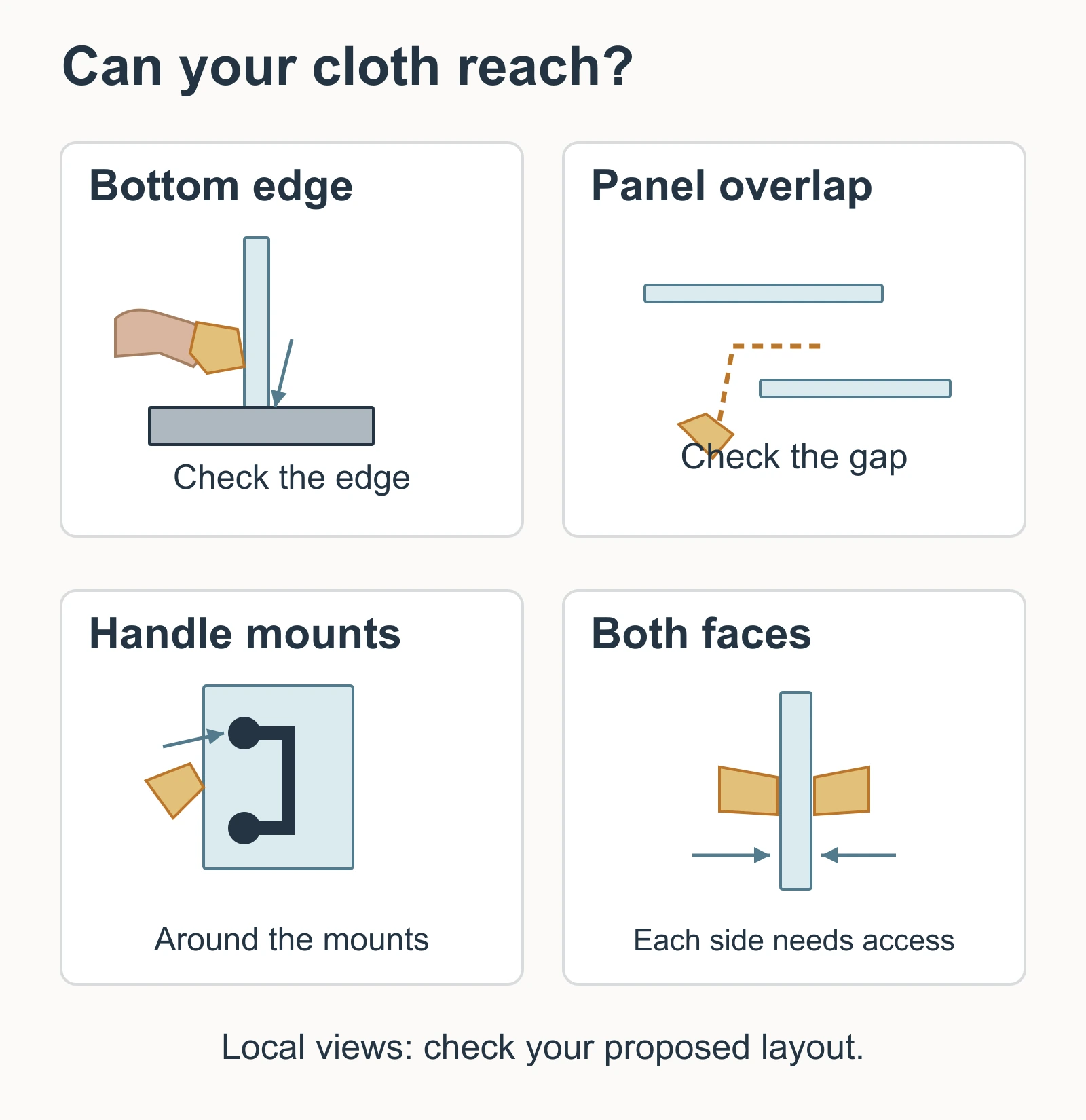
Check the layout’s lower edge, overlap, handle mounts, and bathroom-facing side; your cloth must reach beyond the loose sample.
Gently wipe the actual texture with an allowed cloth when comparing types of glass for shower doors, checking each channel for reach and snagging. Use only the product’s permitted tools and cleaners.
Types of Shower Glass: Safety, Thickness, and Surface Treatments
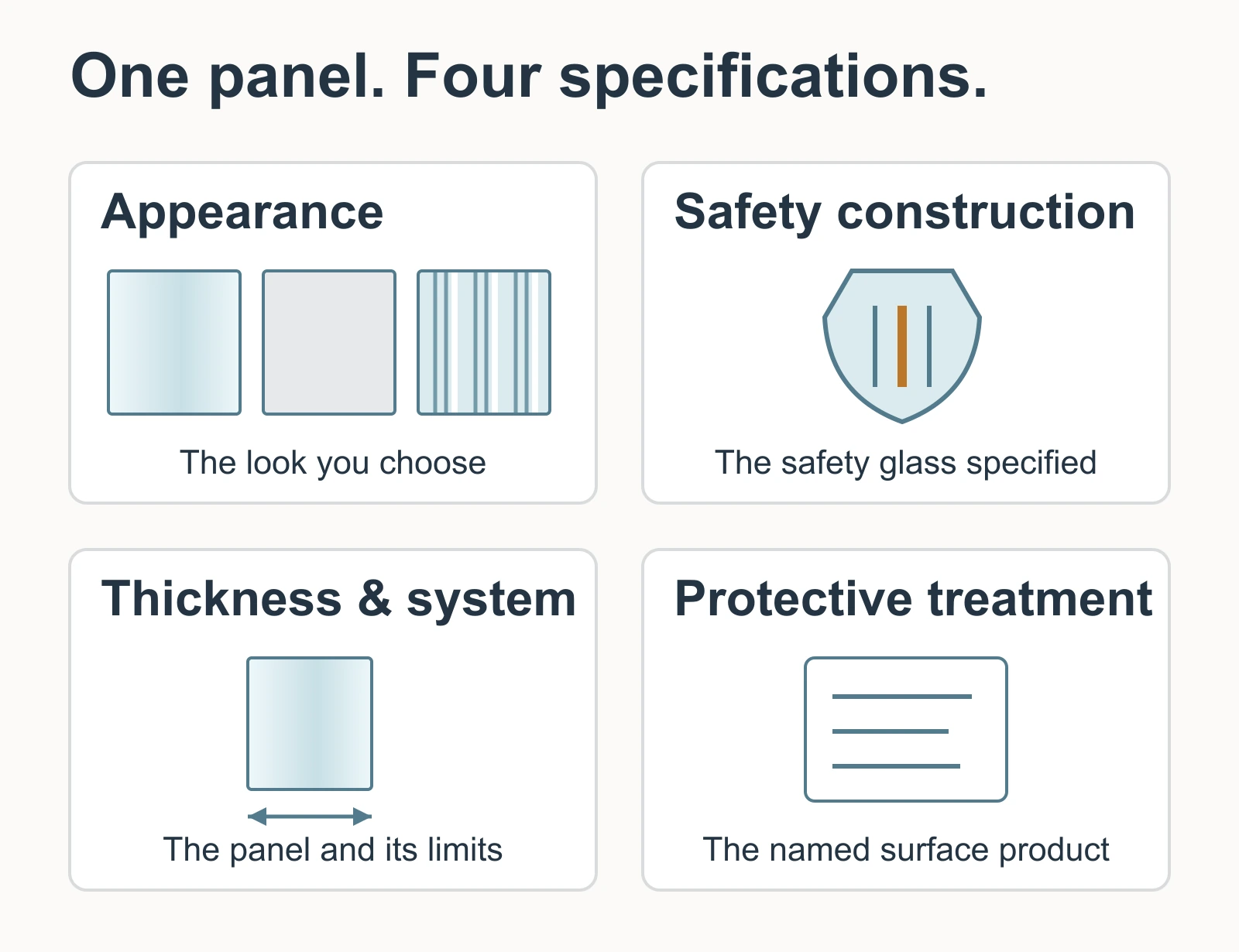
The types of shower glass on a quote describe different things, so separate appearance, safety construction, actual thickness, and protective treatment when ordering types of glass for shower doors.
Appearance Is Not a Shower Door Safety Glass Specification
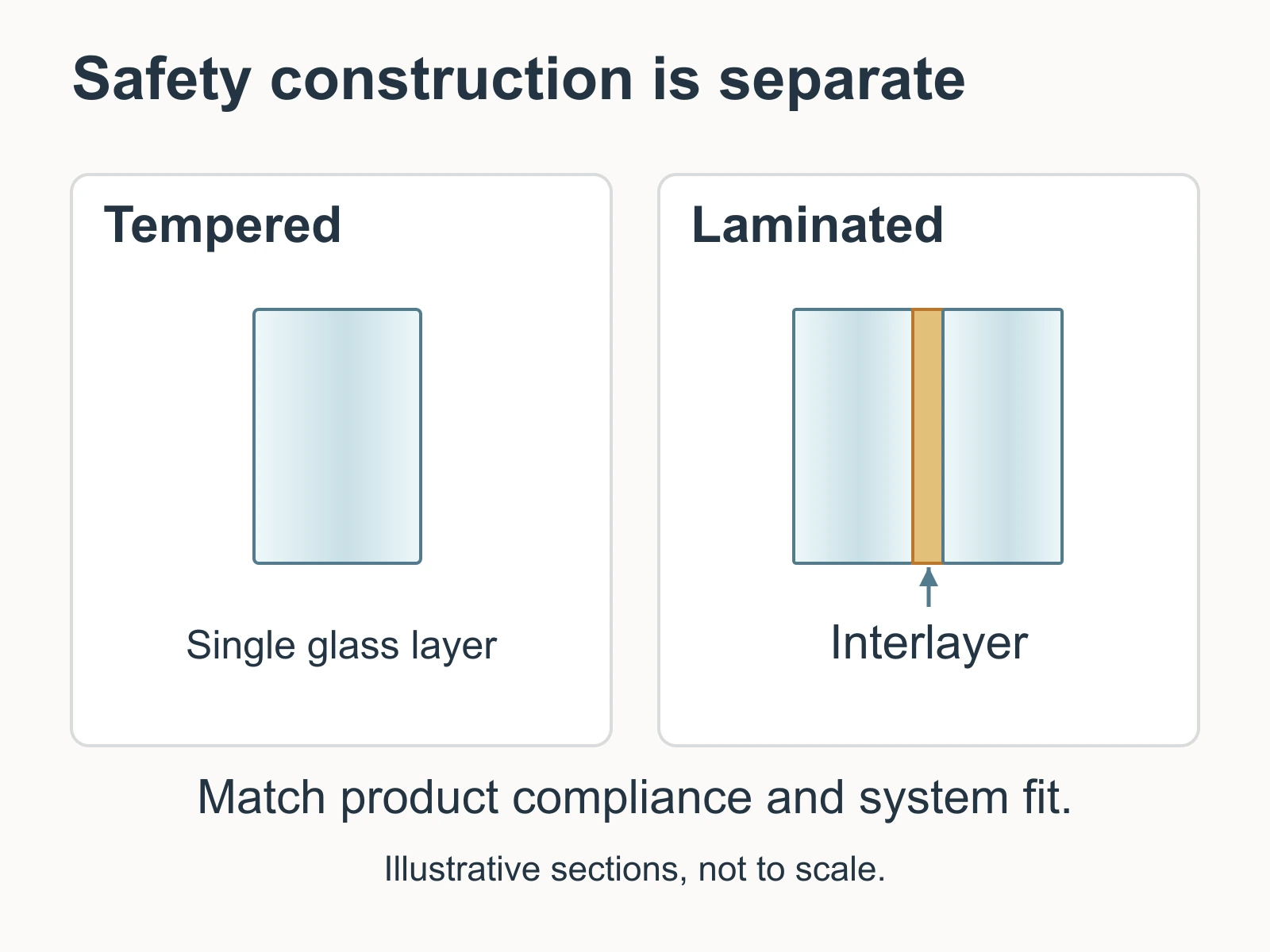
Safety glazing is required for all types of glass for shower doors; clear, frosted, and tinted describe appearance without identifying safety construction. Keep that specification explicit.
Under 16 CFR Part 1201, shower doors and enclosures fall in Category II, the higher impact classification. It isn’t a thickness grade. Section 1201.4 incorporates the applicable ANSI Z97.1-2015 test provisions.
For all types of glass for shower doors, match the safety label to the supplied product. Pause an order with unidentified glass or missing applicable compliance records.
Use our shower-door glass marking and product-specification check to record the mark, look up the dated safety record, and keep it separate from the complete door model.
Guardian explains how an interlayer bonds glass layers and can retain fragments. Choose it where the system permits, using finished panel weight; equal nominal thickness alone cannot establish which construction is heavier.
Thickness and Hardware Must Work as One System
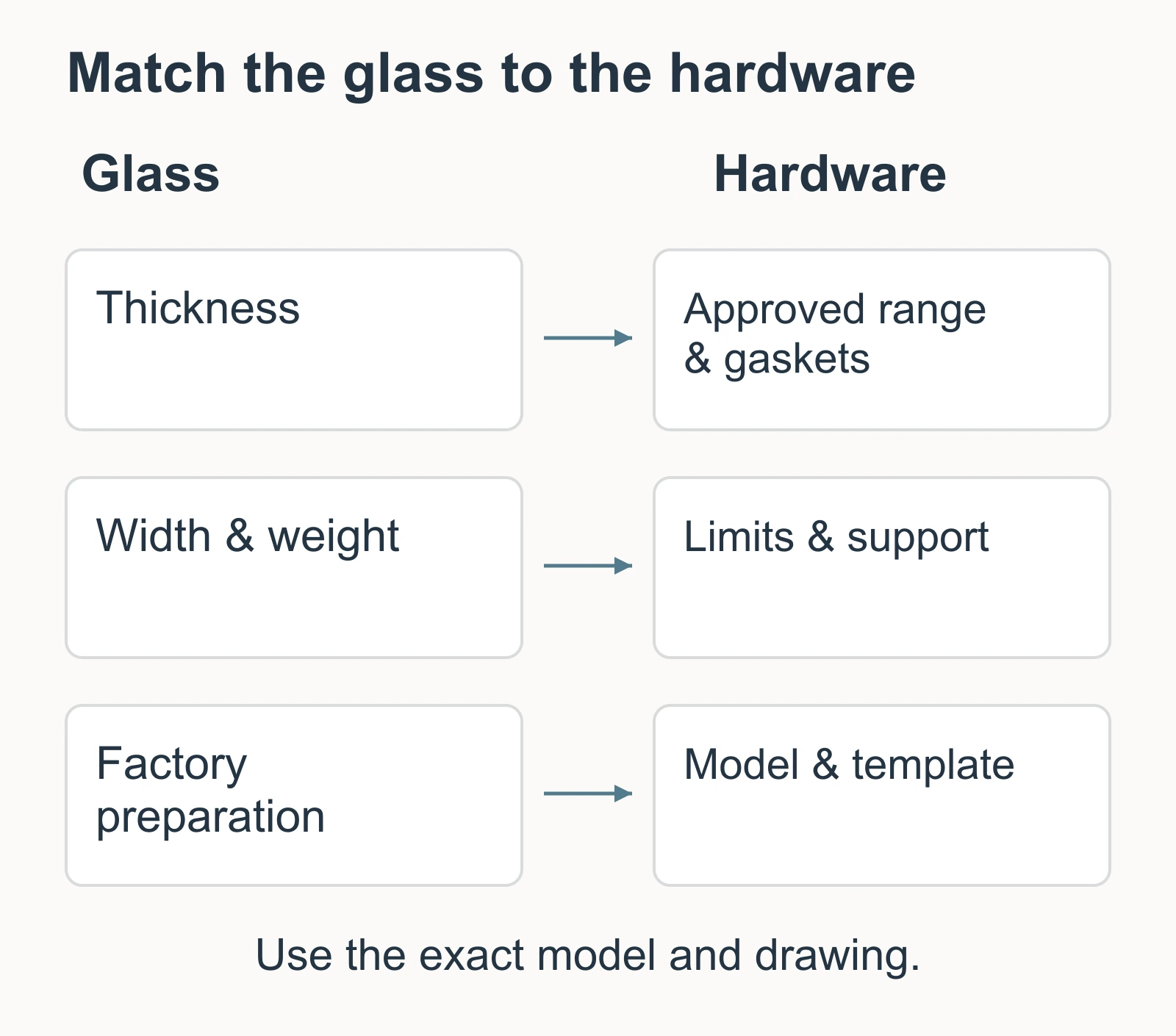
Shower door glass hardware compatibility requires matching thickness, width, weight, supports, gaskets, and cutouts. Choosing types of glass for shower doors and matching finish colors cannot settle those requirements.
CRL’s Geneva 337 product specification requires a separate GEN13 gasket pack for its 5/16-inch glass application, plus the specified cutout template. That ties glass preparation to the exact hinge model.
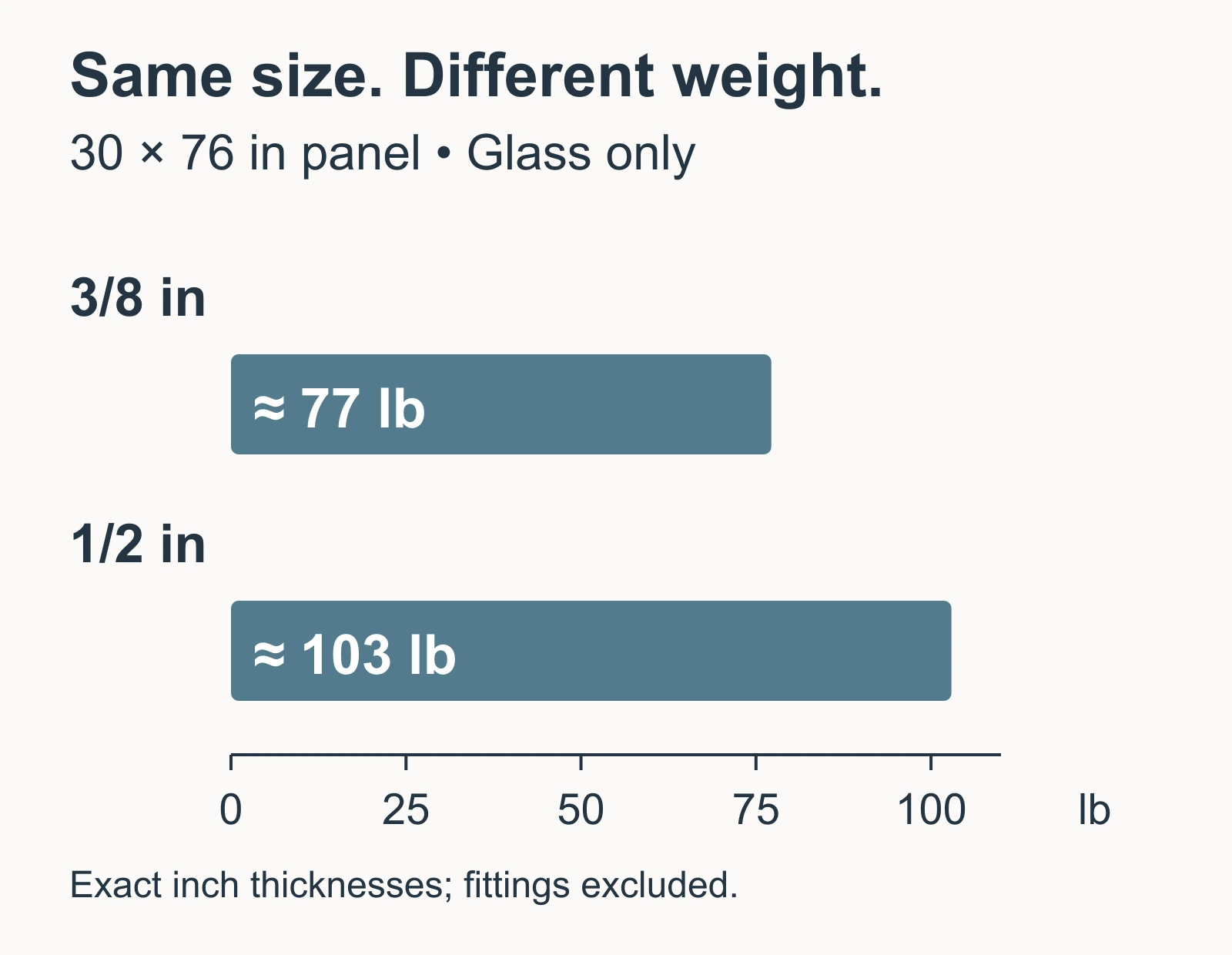
Using NGA’s typical glass density, a 30-by-76-inch panel weighs about 77 pounds at exact 3/8 inch and 103 pounds at 1/2 inch. These exclude fittings; 10 mm and 12 mm products differ. Hardware and support must suit the finished assembly.
Available types of glass for shower doors also depend on thickness: Basco lists Fluted at 1/4 inch and PureClear at 3/8 or 1/2 inch within its range.
A mismatch can put the panel outside the hardware’s limits or leave it with the wrong cutouts. Compare shower-door glass thicknesses before accepting a change; thicker glass gives the hardware more weight to handle.
Specify Protective Treatments Separately
List protective treatments separately when comparing types of glass for shower doors, with the product name and care details behind any easy-clean sales label.
Guardian’s ShowerGuard information describes protection fused to the surface, with clear and low-iron base options. Other treatments don’t automatically share that mechanism just because the sales labels sound similar.
For treated types of glass for shower doors, record the treatment name, application, treated face, and allowed care so the upgrade is identifiable.
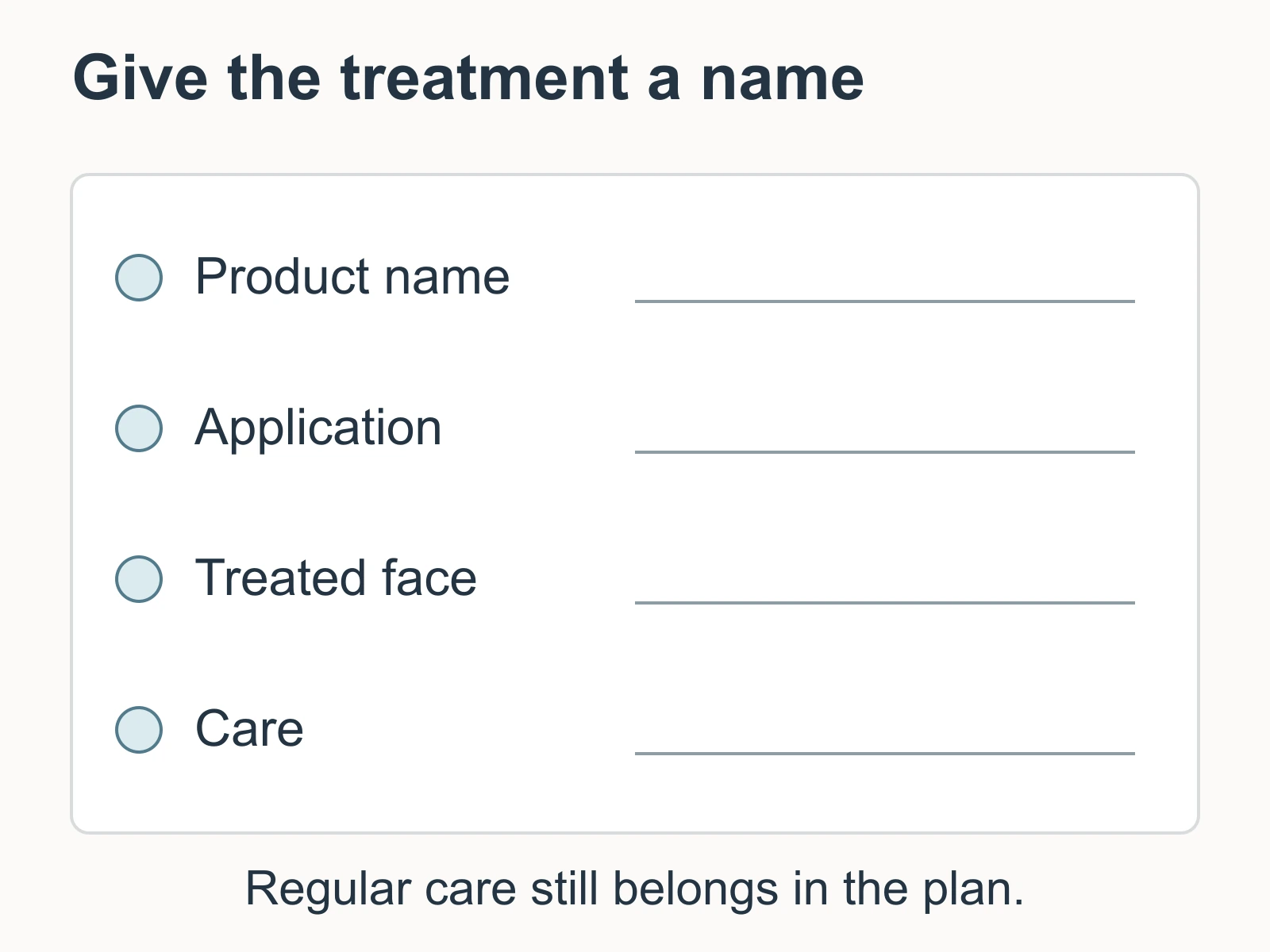
Choose a care routine you’ll follow when weighing treated types of glass for shower doors; regular cleaning stays on the to-do list.
If mineral spots remain after routine care, see how to remove hard-water stains from shower-door glass with a method matched to the treatment and surrounding finishes.
Before You Buy: Check That Your Shower Door Glass Options Fit the System
Before approving types of glass for shower doors, match sample, ordered glass, hardware, and opening. The sample, quote, and drawing should tell the same story.
Fit: Confirm the Finished Opening and Door Movement
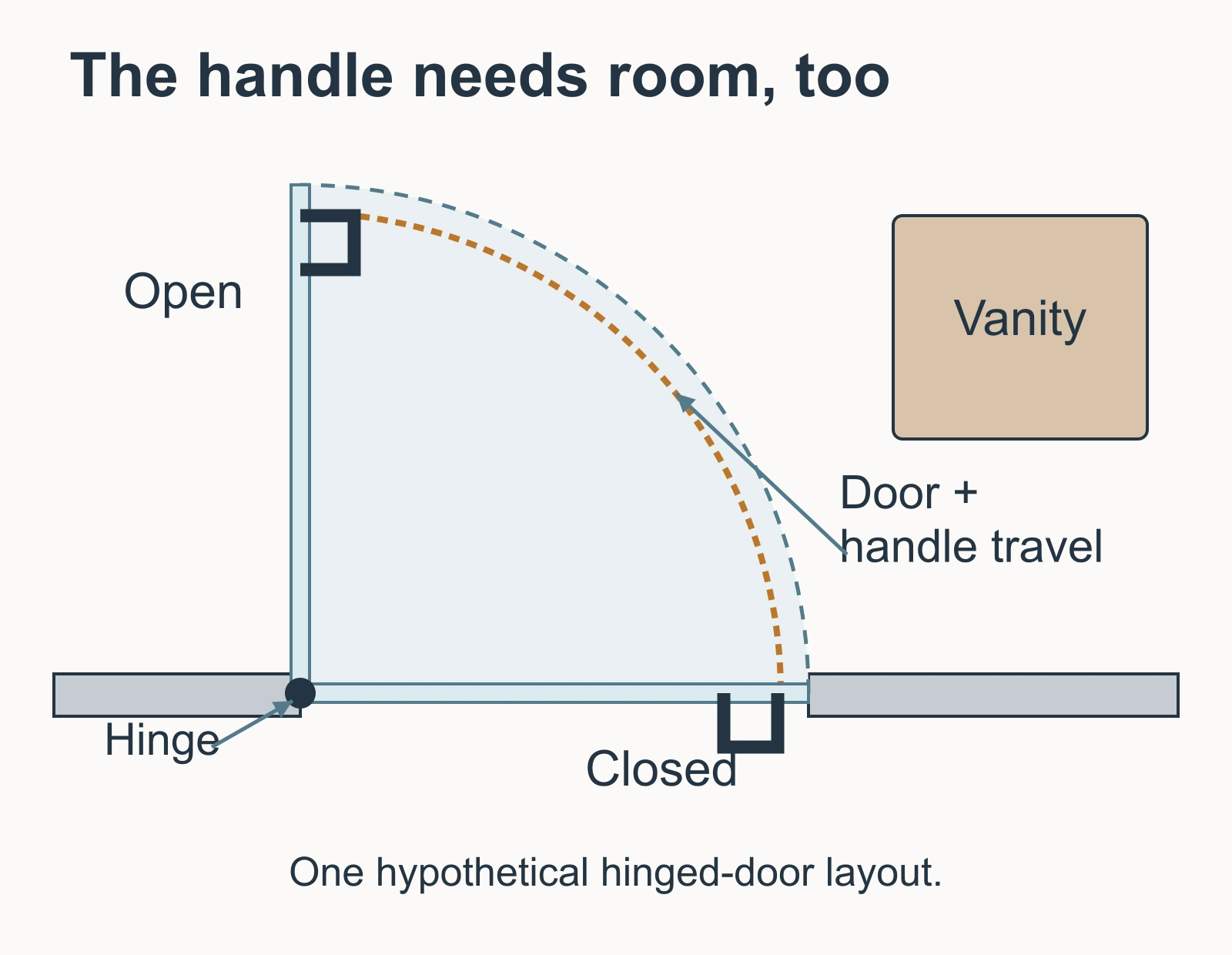
Dimensions for types of glass for shower doors must account for finished-opening readings, model adjustment, usable entry, door movement, and mounting. Fitting the opening is only part of fitting the bathroom.
Delta’s measuring guide uses finished surfaces after wall finishes are installed. Put those readings on the quote; rough-opening dimensions describe the room before its finishes.
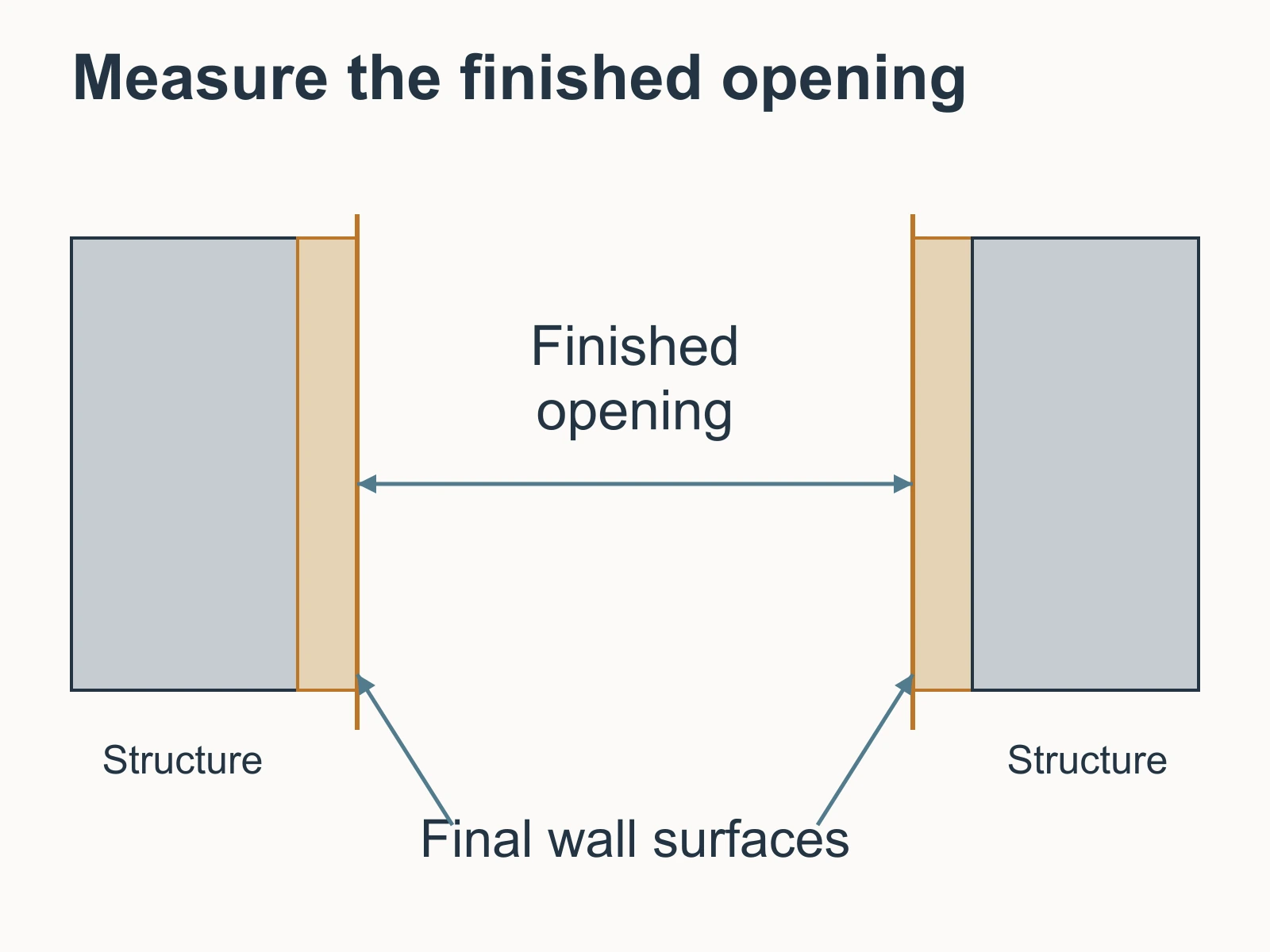
Draw the usable entry and full door-and-handle travel, then check the model’s mounting and adjustment requirements; the handle needs room, too.
Before ordering types of glass for shower doors, measure the finished shower opening and match the readings to the drawing for the bathroom you’re buying for.
Glass and Hardware: Match the Sample, Drawing, and Model
Match the sample, drawing, and hardware model before sending types of glass for shower doors into fabrication, while changes can still go into the order.
Match each glass specification to the corresponding hardware requirement.
| Glass record | Hardware record to match |
|---|---|
| Actual thickness ___ | Approved range and gaskets ___ |
| Panel dimensions/weight ___ | Width/load limits and supports ___ |
| Factory holes/cutouts ___ | Exact model and template ___ |
| Approved sample/code ___ | Matching drawing version ___ |
Shower door glass hardware compatibility requires agreement between the quote and drawing for your chosen types of glass for shower doors, including the fields above.
Confirm substitutions in writing before fabrication, updating the affected sample code, thickness, fitting model, and drawing together so they describe the same door.
Before You Buy: Record the Final Glass Specification
Record your chosen types of glass for shower doors with supporting documents and a status for each unresolved field; a blank still needs an answer.
Keep the approved sample with the drawing version when ordering types of glass for shower doors, marking checklist rows confirmed only after attaching their evidence.
Separate stock status, fabrication start, promised ship date, and installation date. Shipped doesn’t mean shower-ready. Before accepting the quote, establish whether your exact glass code changes any of those dates.
Keep unresolved fields marked unconfirmed until the order records agree.
| Check | Attach or record | Initial status |
|---|---|---|
| Fit | Finished readings, entry, clearance, mounting | Unconfirmed |
| Glass | Sample code, safety record, thickness, dimensions | Unconfirmed |
| Treatment | Named product, application, face, care | Unconfirmed |
| Hardware | Model, supports, limits, gaskets, cutout drawing | Unconfirmed |
| Price and timing | Baseline, upgrades, stock, ship/install dates | Unconfirmed |
| Approval | Matching quote and drawing version | Unconfirmed |
Five checks before approving the order
Run through these five checks and approve the order once the specifications match and the supporting records are attached.
-
Confirm fit: Match the finished-opening readings, usable entry, door movement, and mounting conditions to the proposed drawing before approving the dimensions.
-
Record the glass: Write down the glass code, appearance, safety label and compliance record, thickness, dimensions, and finished panel weight for the actual order.
-
Identify the treatment: Name the protective treatment and attach its application record, treated face, and permitted care details, or explicitly record that none was ordered.
-
Match the hardware: Check the hardware model, support layout, panel limits, gaskets, and factory hole or cutout drawing against the glass you’re ordering.
-
Resolve and approve: Record the clear-glass baseline, option charges, stock status, ship date, and installation date, then settle discrepancies before you approve the order.
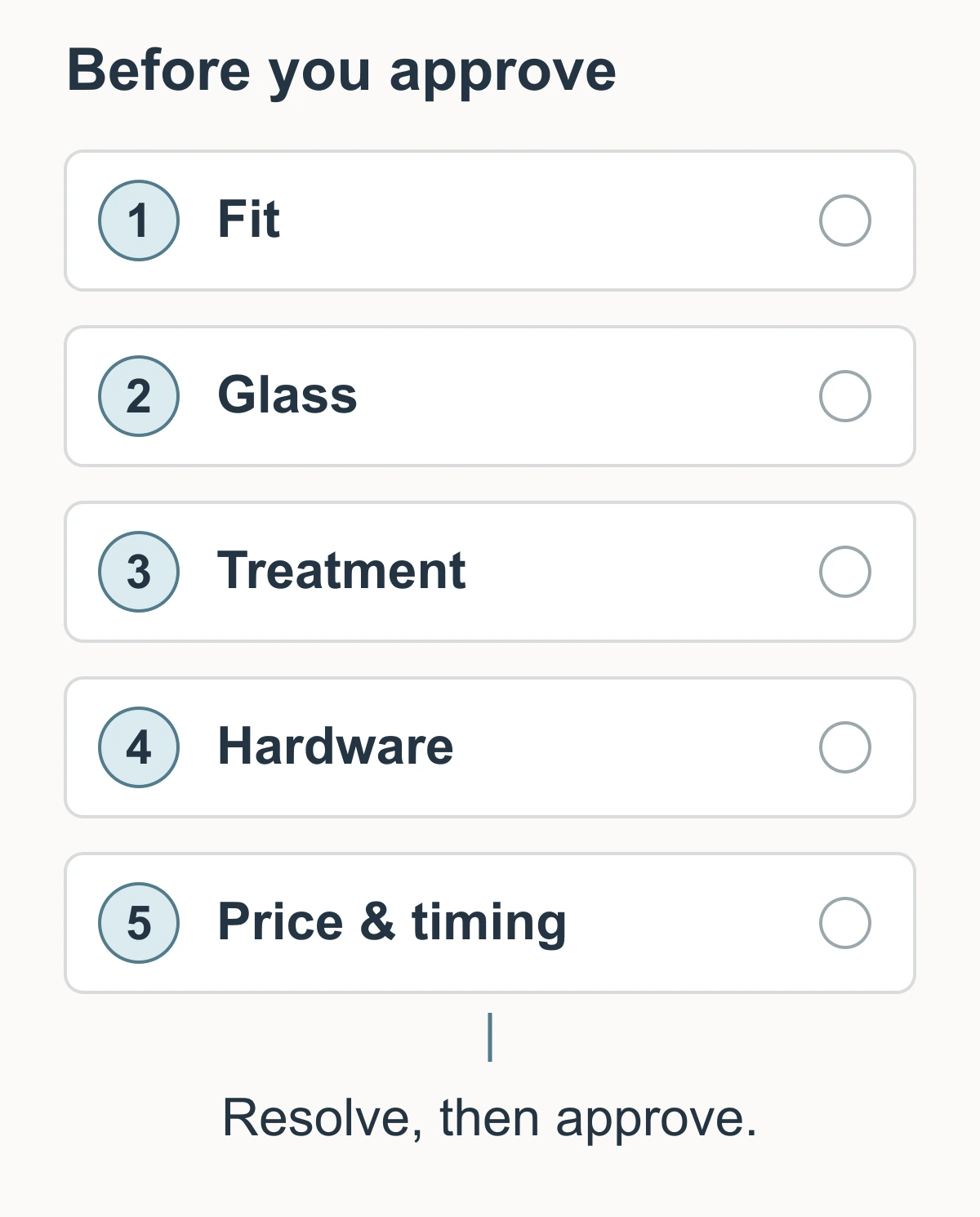
Carry your selected types of glass for shower doors into the custom shower door order checklist, keeping agreed price and delivery commitments with the specification you’re approving.
Conclusion
Choose types of glass for shower doors by priority, settle safety, thickness, and treatment, then match opening and hardware for the look you want in a working door.
FAQ
What types of glass can I choose for shower doors?
Common types of glass for shower doors include clear, low-iron, frosted/obscure, rain/patterned, fluted/reeded, and tinted. These appearance labels still need a separate safety specification; Basco’s named options show why the actual product code matters.
How do I choose between clarity, privacy, and easier upkeep?
When comparing types of glass for shower doors, choose clear views for tile visibility, assess identified samples for privacy, and pair reachable surfaces with product-specific care instructions for upkeep. Let your main priority decide.
Why are appearance, safety construction, thickness, and coating separate choices?
They answer different questions: appearance, safety construction, hardware fit, and supplied treatment. For treated types of glass for shower doors, Guardian’s ShowerGuard options show how one protection product can accompany different base-glass appearances.
What fit, glass, and hardware details should I confirm before buying?
Before approving types of glass for shower doors, match finished measurements and movement clearance, the glass specification, and hardware/factory preparation to the drawing. CRL’s model-specific requirements show why even the gasket and cutout details count.
How this guide was prepared
Sam wrote this guide from the linked manufacturer information and U.S. safety rules. Ronni completed the technical review, confirmed by the publisher. The customer account and photographs were supplied for this article, including the rain-versus-frosted choice and its reasons.
Weights are calculated from dimensions and typical glass density. The cover and material illustrations were AI-generated; technical diagrams explain specifications and proposed checks. No privacy or cleaning test is reported.
Sources and citation notes
These sources support the glass distinctions, safety requirements, care guidance, and calculations used above.
- Guardian low-iron glassSupports the reduced-green color distinction in section 1.1.
- Walker acid-etched glassSupports named finish differences in section 1.2, not measured bathroom privacy.
- Glaz-Tech pattern catalogSupports actual pattern names and availability qualifications in section 1.2.
- Agalite Accent glassSupports Bronze Tint and Gray Tint examples in section 1.3.
- EnduroShield FAQSupports ongoing, product-specific care in section 2.3 and FAQ 2.
- Current 16 CFR Part 1201Supports the U.S. shower-door safety-glazing context in section 3.1.
- CRL Geneva 337Supports the GEN13 gasket example and model-specific preparation in section 3.2 and FAQ 4.
- Basco glass optionsSupports the Fluted/PureClear availability example in section 3.2 and named-option recap in FAQ 1.
- Guardian ShowerGuardSupports the named protection/base-glass distinction in section 3.3 and FAQ 3.
- Delta measuring guideSupports finished-surface measurements in section 4.1; no model-specific adjustment value is borrowed.
- Pilkington exposed-edge explanationSupports the greater visibility of green edges in thicker glass; no fixed thin-glass visibility threshold is claimed.
- Guardian laminated glassSupports bonded layers and fragment retention; does not approve a particular shower system.
- NGA physical properties of typical float glassSupplies typical density of 156 lb/ft³ for the article's explicit inch-thickness weight calculations.