
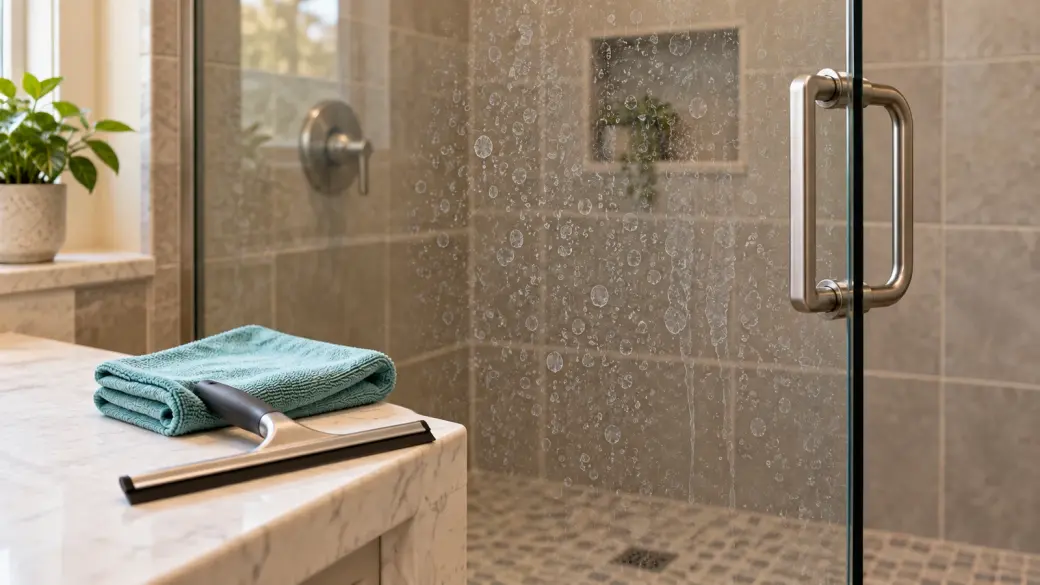
Here’s how to remove hard water stains from glass shower doors: wash off ordinary film, treat remaining minerals with a cleaner your door allows, rinse, then judge the dry glass. Start with the care sheet before reaching for vinegar or CLR. Those white speckles need the right cleaner, not a harder workout.
I’ve included my own cleaning video below so you can see the strip I cleaned.
Before You Clean Coated Shower Glass, Check Every Surface
To clean coated shower glass, first identify the treatment, such as EnduroShield or ShowerGuard. Think of the care sheet as the recipe: it tells you which ingredients and tools belong on that surface. Check the surrounding metal and seals too.
What Should You Check Before Choosing a Hard-Water Cleaner?
Find the treatment and treated face, shower-side or room-side, in the care sheet or purchase records. Have the supplier confirm missing details. “Tempered” describes safety construction, not treatment. See what treatment information to request. Descaling means removing mineral deposits.
Parts translation: seals are flexible glass-edge strips; the bottom sweep sits beneath the moving door. Profiles are rigid frame/channel pieces. These neighbors may need different care.
| Check | Record before selecting a method | If unresolved |
|---|---|---|
| Glass | Treatment, treated face, allowed cleaner/tool | Pause descaling; obtain the care sheet |
| Metal | Door model and frame/hardware finish | Do not assume glass permission covers it |
| Seals | Cleaner permission for the attached material | Keep the proposed product off them |
| Nearby surfaces | Tile, grout, stone, printing or decorative trim | Check each exposed surface separately |
No paperwork? Send the seller or installer whole-door photos, readable labels and any purchase/remodeling records you have. Request the treatment, treated side, metal finish and complete-door care. Mark unknowns; photos can’t identify an invisible coating.
Label each material allowed, prohibited or unknown. A test doesn’t override a ban. Decorative grids need their own black-grid surface care check.
Where Will the Cleaner and Rinse Water Go?
“Frameless” doesn’t mean the glass lives alone. Hinges pivot, mounts hold the handle, and seals and sweeps line the edges. Include them in your cleaner/runoff check.
On framed or sliding doors, check lower channels, profiles and panel overlap, where one panel passes behind another. You need access to both clean and rinse.
The metal finish is the factory surface on fittings or frames. DreamLine excludes acids, ammonia and bleach from hardware care; STERLING also separates metal care. Follow your door’s rules.
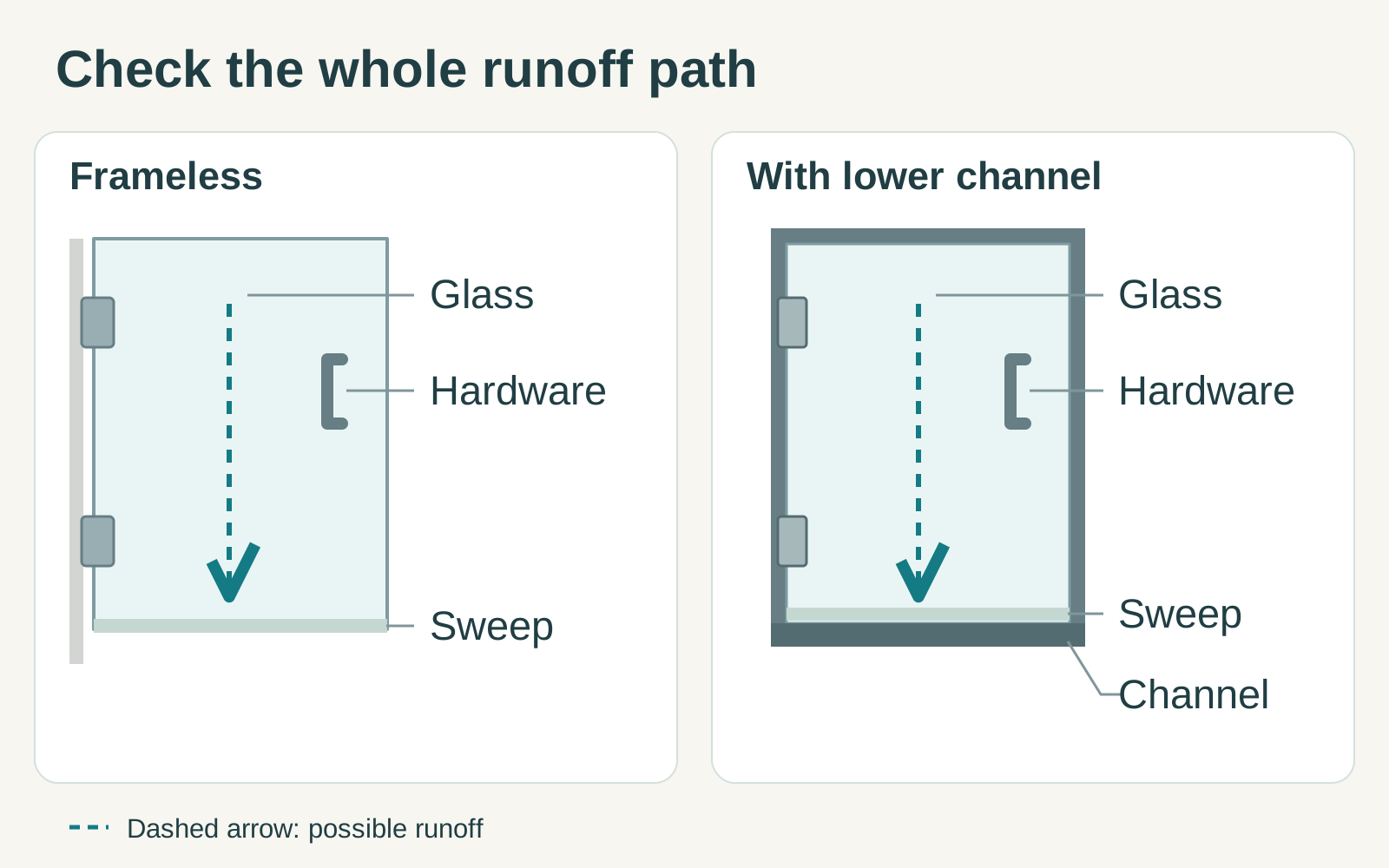
Rule out methods whose cleaner or rinse water would hit prohibited surfaces; a towel doesn’t change compatibility. See semi-frameless access or track cleaning for awkward spots. Leave the door assembled.
Suppose the glass allows vinegar but the metal below prohibits acid. Check the whole removal path. If you can’t avoid that metal, get a complete-door method from the door/finish supplier first.
Limescale on Shower Glass: Compare Compatible Cleaning Methods
For limescale on shower glass, start with ordinary washing, then choose a compatible mineral-removal method for what remains. You don’t need a bathroom cabinet full of contenders.
Start with the Door’s Approved Mild Cleaner
Start with your door-approved mild cleaner. It may lift film while minerals remain. STERLING specifies diluted mild detergent, soft tools and rinsing. Follow door and detergent directions; dish soap isn’t necessarily neutral pH, and degreasers/disinfectants aren’t interchangeable substitutes.
Does Vinegar Damage Shower Glass?
Use vinegar when your treatment allows it. EnduroShield’s care sheet permits it for its named surface. That isn’t a blanket pass for other coatings, hinges or seals; skip vinegar where prohibited.
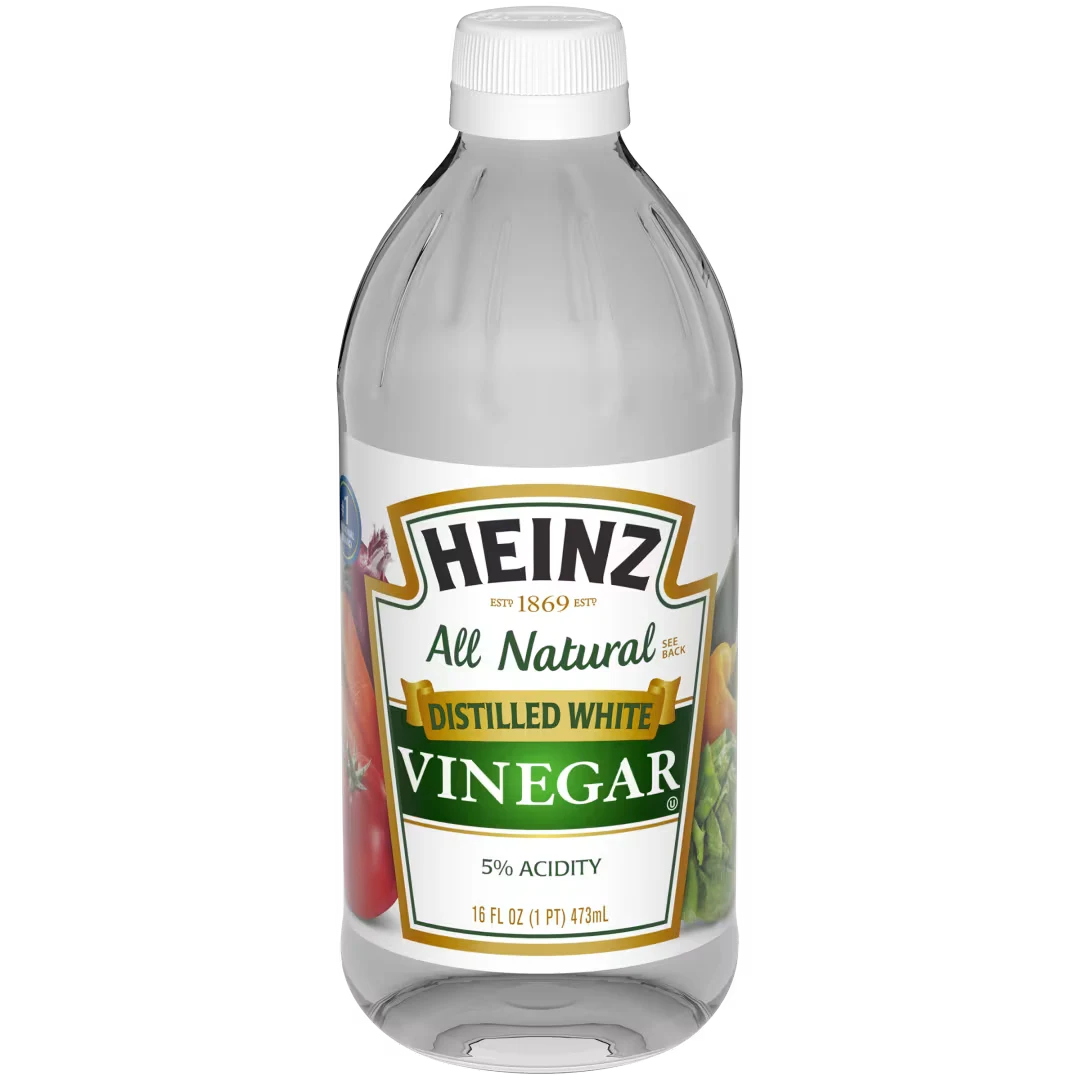
The Heinz white vinegar example states 5% acidity. “Undiluted” means that vinegar without added water, not pure acid or stronger cleaning vinegar. The percentage identifies the bottle, not compatible surfaces.
CLR vs. Vinegar: Check the Exact Formulation
Treat the Acid Ladder as a menu, not a challenge to climb higher. Pick one allowed row across both tables: product/surface, then contact/removal. Acid identity, concentration and performance are separate facts.
| Method | Use this product | Chemistry | Where it fits |
|---|---|---|---|
| R1: mild wash | Door-approved mild nonabrasive detergent | Formula/pH varies; not an acid treatment | Glass, finish and seals must allow it |
| R2: vinegar | Named-treatment method; Heinz 5% white vinegar example | Acetic acid; 5% bottle acidity, not pH | Confirm treated face and surroundings; no blanket coating approval |
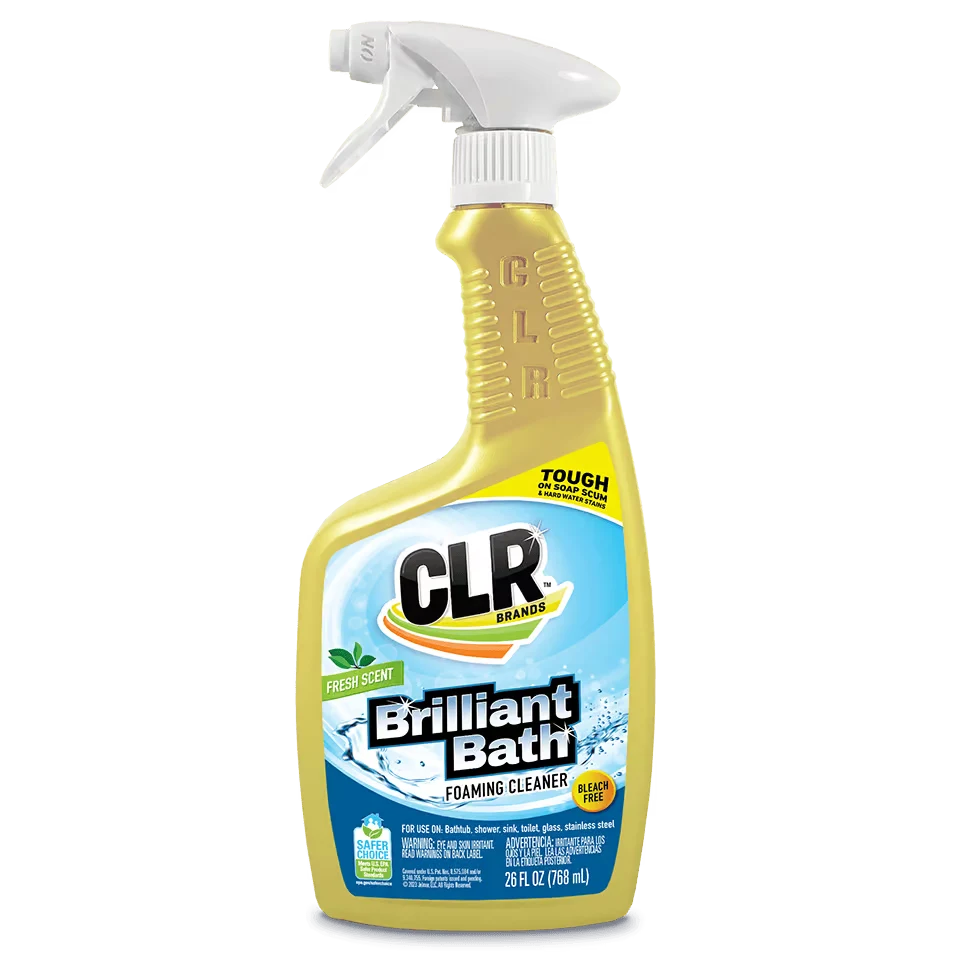
| R3: commercial cleaner | Standard CLR Brilliant Bath; not Original, Cling or Free & Clear | Lactic acid; concentration/pH unverified | Compatible uncoated glass; no coated/sealed surfaces or frame/trim/track contact |
| Method | Dilution/contact | Removal/rinse | Check afterward |
|---|---|---|---|
| R1 | Door/detergent directions; no universal ratio/time | Allowed soft tool, rinse, dry | Compare remaining deposits; STERLING care |
| R2 | EnduroShield light buildup: undiluted white vinegar, a few minutes; no added soaking | Microfiber, clean-water rinse, dry as directed | Recheck residue/permission; EnduroShield sheet and Heinz label |
| R3 | Glass FAQ: damp cloth/sponge, remove after two minutes; no added dilution specified | Clean cloth/sponge, clean cold water; avoid frame/trim/track | Inspect dry; stop for surface changes; Brilliant Bath glass FAQ |
For compatible uncoated glass, standard CLR Brilliant Bath is an option with listed shower-door use. Skip it on coated or sealed surfaces, even if another source mentions CLR generally. Its glass FAQ specifies cloth application and removal after two minutes; general directions say two to three. Resolve any conflicting bottle directions before use.
Remove Hard Water Stains from Shower Glass, Then Check the Dry Result
To remove hard water stains from shower glass, finish one small area through preparation, application, rinsing and drying. Wet clarity is encouraging; the dry check tells you what changed.
Prepare the Glass and Check a Small, Permitted Area
Check for cracks or chips before wetting or rubbing. If you find damage, stop cleaning and using the door until the glass is assessed. DreamLine’s warning makes that stop-use condition explicit.
Gather the cleaner, approved cloth/sponge, clean water, drying cloth and timer. Check the actual wiping face: a soft sponge back doesn’t approve its scouring side. Specialty pads need treatment-specific permission.
For DreamLine glass, keep bristle brushes off the surface. Its maintenance instructions call for a soft cloth or squeegee.
Using Brilliant Bath? Put on household rubber gloves and ventilate the room, as its instructions require.
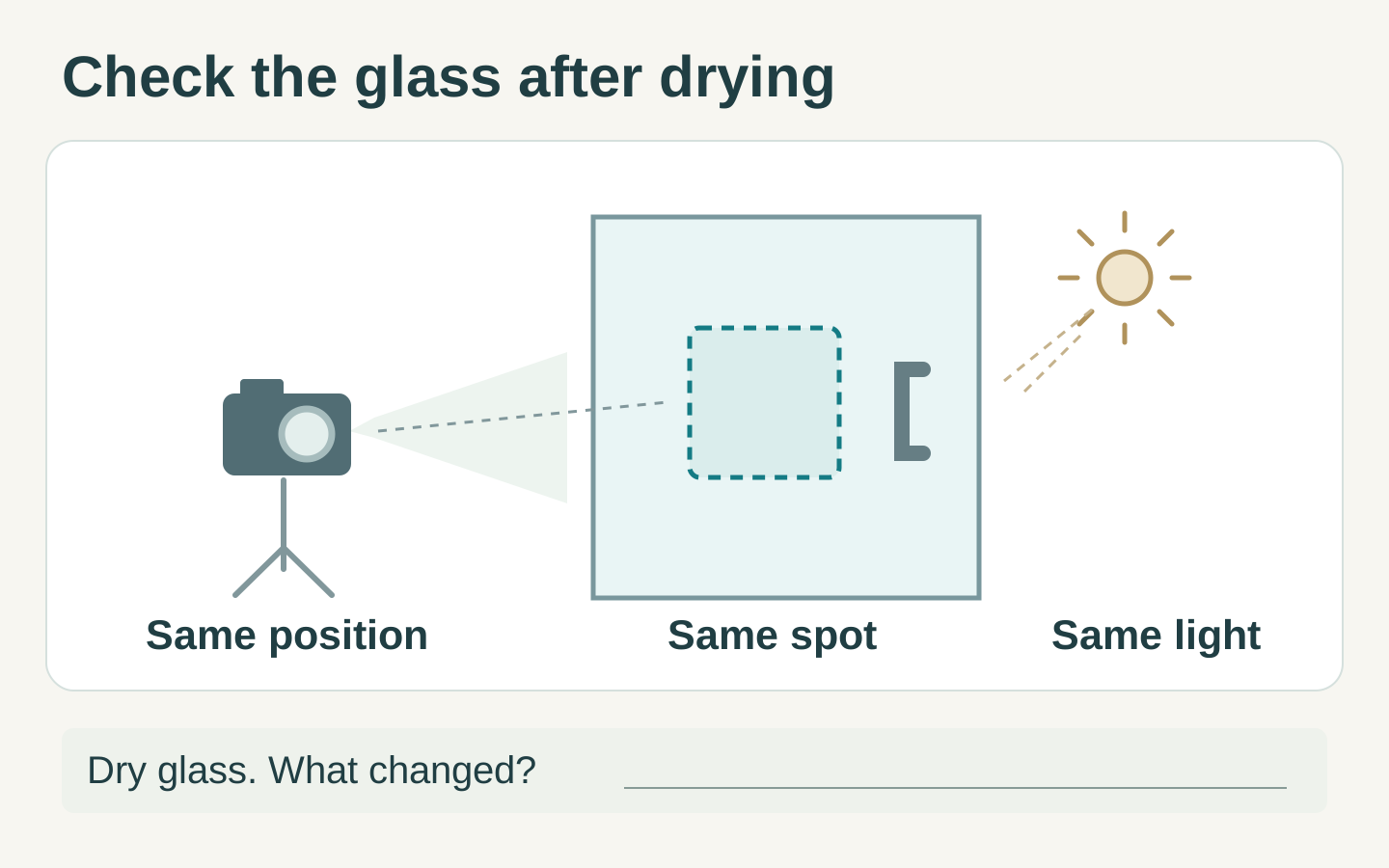
Photograph the dry patch before any wetting or test. Keep the same lighting and a fixed reference, such as the handle. Compare the same patch, not two flattering camera angles.
Before opening the bottle, check test, contact, removal, previous-cleaner and repeat instructions. Resolve missing or conflicting directions with the product/door supplier.
Treat Stubborn Hard Water Stains on Glass Shower Doors
Keep your table row, bottle and timer handy. A wet cloth already gives you enough to juggle.
- Choose one method that fits the glass, cleaner, surrounding materials and complete removal path.
- Check for damage and record the dry patch. Clear previous cleaner residue and do the specified small-area test.
- Apply as that method directs. For Brilliant Bath’s glass example, use a damp cloth or sponge instead of spraying the assembled door.
- Follow the contact instructions. Don’t add soaking time because a patch looks stubborn.
- Remove and rinse as the method directs. For R3, use a separate clean cloth or sponge with clean cold water, keeping solution off incompatible parts.
- Dry with an allowed cloth or squeegee. Compare the original patch under the same light and from the same position before deciding what comes next.
If cleaner hits a prohibited surface or changes the finish, stop applying and scrubbing. Remove it promptly using that surface’s instructions. This takes priority over the glass timer.
For accidental acid, ammonia or bleach contact, DreamLine’s hardware guidance calls for prompt rinsing and soft-cloth drying. Don’t add another chemical to neutralize it.
Dry the Glass and Record What Changed
Dry the patch and compare with the baseline and any untreated reference from the same position and light. Record less deposit, no change or new marks. Keep original photos; pictures alone can’t distinguish residue from treatment damage.
Sam performed and filmed this cleaning firsthand, applying toilet-bowl cleaner to a narrow strip of spotted shower glass, scrubbing it with a toothbrush, then rinsing it with the shower. The treated strip looks noticeably clearer than the glass beside it.
| Cleaning record | Your notes |
|---|---|
| Treatment/face and door finish | ______ |
| Untreated dry appearance and reference | ______ |
| Product name and current label | ______ |
| Tool and application area | ______ |
| Dilution/contact followed | ______ |
| Removal/rinse completed | ______ |
| Same-condition dry observation | ______ |
| Next allowed action or stop | ______ |
Stubborn Limescale on Shower Glass: When to Stop Cleaning
If a completed treatment changes nothing, stop repeating it. Review your notes before buying another bottle or giving the same patch another mystery soak.
Vinegar Not Working? Recheck the Surface and Residue
Was vinegar allowed? Did it reach the patch? Were it and previous cleaner removed properly? Film or other deposits may remain. A failed attempt doesn’t identify the cause.
If deposits decreased without new damage, repeat only as the instructions allow, even with haze remaining. If the full method changed nothing, have the door/treatment provider review your notes before switching methods. Don’t extend soaking to force a result.
Hard Water Stains vs. Etched Shower Glass: Why Can Haze Remain?
Haze isn’t a diagnosis. It might be residue, treatment trouble or etching, meaning glass damage. A fingernail, photo or failed vinegar attempt can’t prove etching. Removing deposits and repairing damaged glass are different jobs.
ShowerGuard notes that softeners don’t remove silica, which can leave spots. That explains a possible limit, not your patch’s identity. Once damage is confirmed, stop expecting a chemical wash to restore the surface.
When Should You Stop Cleaning and Have the Glass Assessed?
Use the first row that matches, starting at the top. A clearer patch doesn’t cancel new damage or a changing finish.
| First matching result | Do this next | Where to stop |
|---|---|---|
| Cracks/chips | Stop cleaning and using the door; contact installer/glass service | No use until assessed |
| New marks or peeling/changing finish | Stop, promptly remove as directed, contact door/finish provider | Don’t repeat that method |
| Unknown product/treatment or permission | Get the missing instructions | No descaling until resolved |
| Less deposit, some haze possible; no new problem | Follow repeat limits. After the last allowed pass, ask about remaining haze or start routine care if satisfied | No repeats beyond instructions |
| No improvement after the complete method | Review notes with door/treatment provider before alternatives | No guessed extra soaking, stronger acid or abrasives |
Cloudy glass alone isn’t a reason to buy a whole new enclosure. If damage is confirmed, compare repair and replacement options for the affected part. Make the spending decision after the diagnosis.
For care questions, contact the door/treatment supplier; for damaged glass, the installer/glass service; for changing metal, the door/finish provider. Send your cleaning record and ask what to do next. If photos don’t settle it, an on-site assessment may be needed.
Clean Coated Shower Glass with a Routine That Limits New Spots
The best routine is one you’ll do. Keep tools handy and follow your treatment’s schedule. Stronger cleaners won’t do the daily wiping for you.
Prevent Hard Water Stains on Shower Doors with a Repeatable Routine
Remove water after showering with an allowed cloth/squeegee. Imagine a rushed weekday morning: the tool within reach gets used. Keep care instructions nearby. This limits new spots without promising permanently spotless glass.
ShowerGuard advises against aftermarket coatings over its surface. Spots alone aren’t a reason to add one. Follow the existing glass’s routine; easy-care glass still hasn’t given the squeegee the day off.
Dawn, CLR and Professional Cleaning: Common Questions
Choose the exact product, not just a familiar brand name.
Does Dawn and vinegar remove hard water stains?
Don’t make it your default recipe. EnduroShield’s instructions allow mild soap and vinegar for its treatment, but that doesn’t approve every Dawn formula or contact with metal and seals. Use your named treatment’s directions.
What happens if you mix vinegar and CLR?
Don’t mix them. Brilliant Bath’s instructions prohibit mixing it with other cleaners or bleach. Use one approved product, remove it as directed, then check the switching instructions before trying another.
Does CLR need to be rinsed off?
Yes. For Brilliant Bath’s glass method, use clean cold water to remove it after two minutes, following its glass instructions. Don’t leave residue to air-dry. Check separate directions for other CLR formulas.
How do professionals clean hard water stains?
Ask which glass treatment, exact cleaner and wiping face they’ll use, and how removal avoids incompatible parts. Get that plan before agreeing to treatment. The installed glass and finish instructions still set the limits.
October 30, 2026 update: Clarified the cleaner and tool guidance beside my original video.
Sources and citation notes
Manufacturer instructions behind the methods and limits in this guide.
- DreamLine product maintenanceSeparate glass/hardware care and metal cleaner restrictions.
- STERLING bath and shower door careMild detergent, soft tools, rinsing and finish-specific limits.
- EnduroShield US care instructionsNamed-treatment vinegar route, rinsing and daily care.
- Heinz distilled white vinegar labelThe identified example bottle has 5% acidity, not universal glass permission.
- CLR Brilliant Bath product informationExact formulation identity, listed ingredients and coated/sealed-surface exclusion.
- CLR glass-specific FAQDamp-cloth/sponge application, frame exclusion and two-minute cold-water removal.
- Brilliant Bath protection and mixing instructionsVentilation, household rubber gloves, test and no mixing with other cleaners.
- ShowerGuard care FAQSilica/softener boundary and aftermarket-coating limits.
- DreamLine damaged-glass warning, Infinity-Z manual Ver1 062025, PDF p.5Do not operate damaged glass; used for the pre-cleaning and stop-use boundary, not model-wide installation advice.
- PubChem acetic-acid recordIdentity of the acid in vinegar; no concentration or permission is inferred from the chemical database.