Contents
4 parts · 11 sections
 About Us
Find affordable shower doors without cutting corners on glass, hardware, seals, or fit. Compare savings, installed costs, upgrades, and a $260 customer case.
Buy / Budget buying guide
4 parts · 11 sections
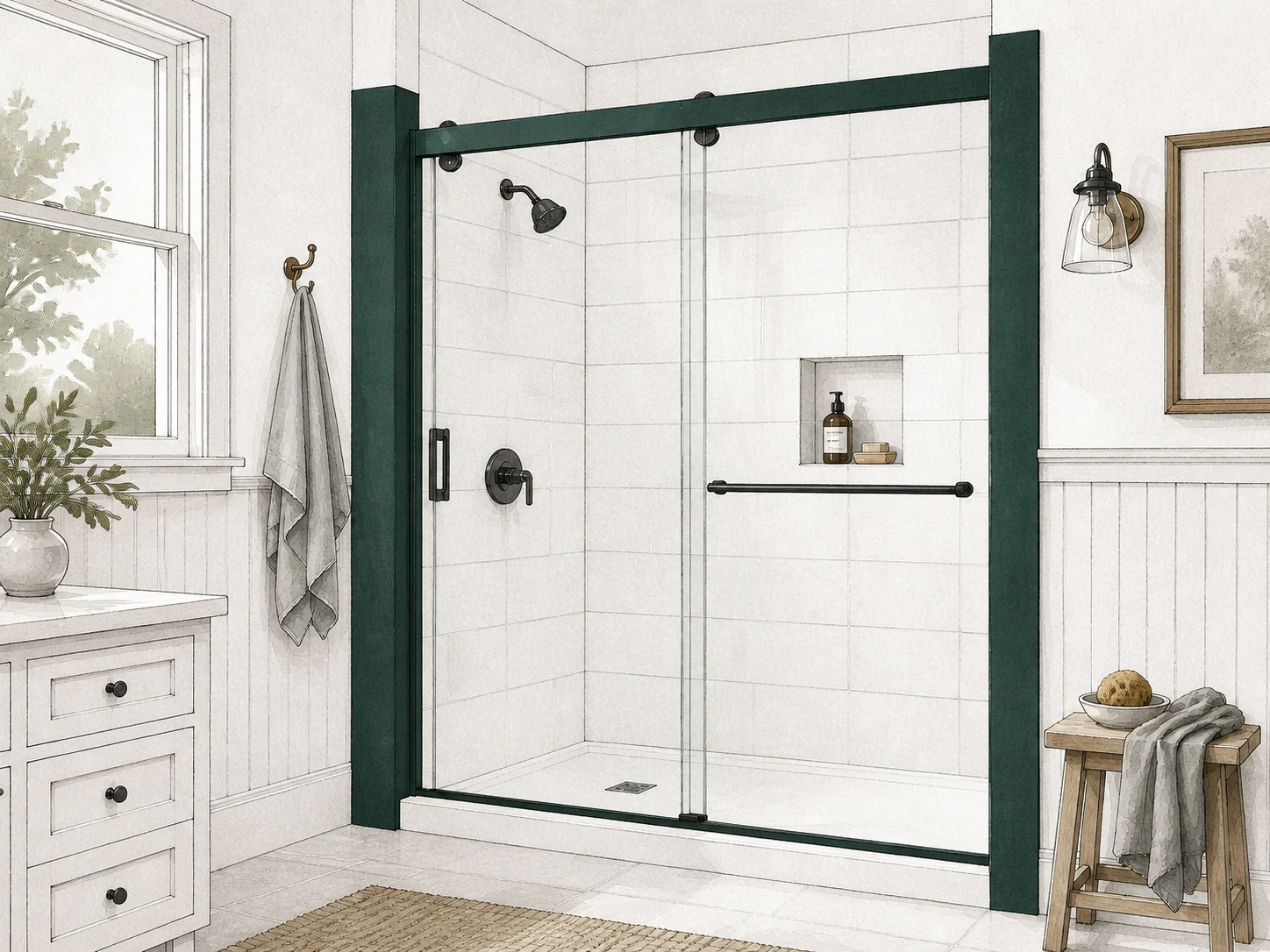
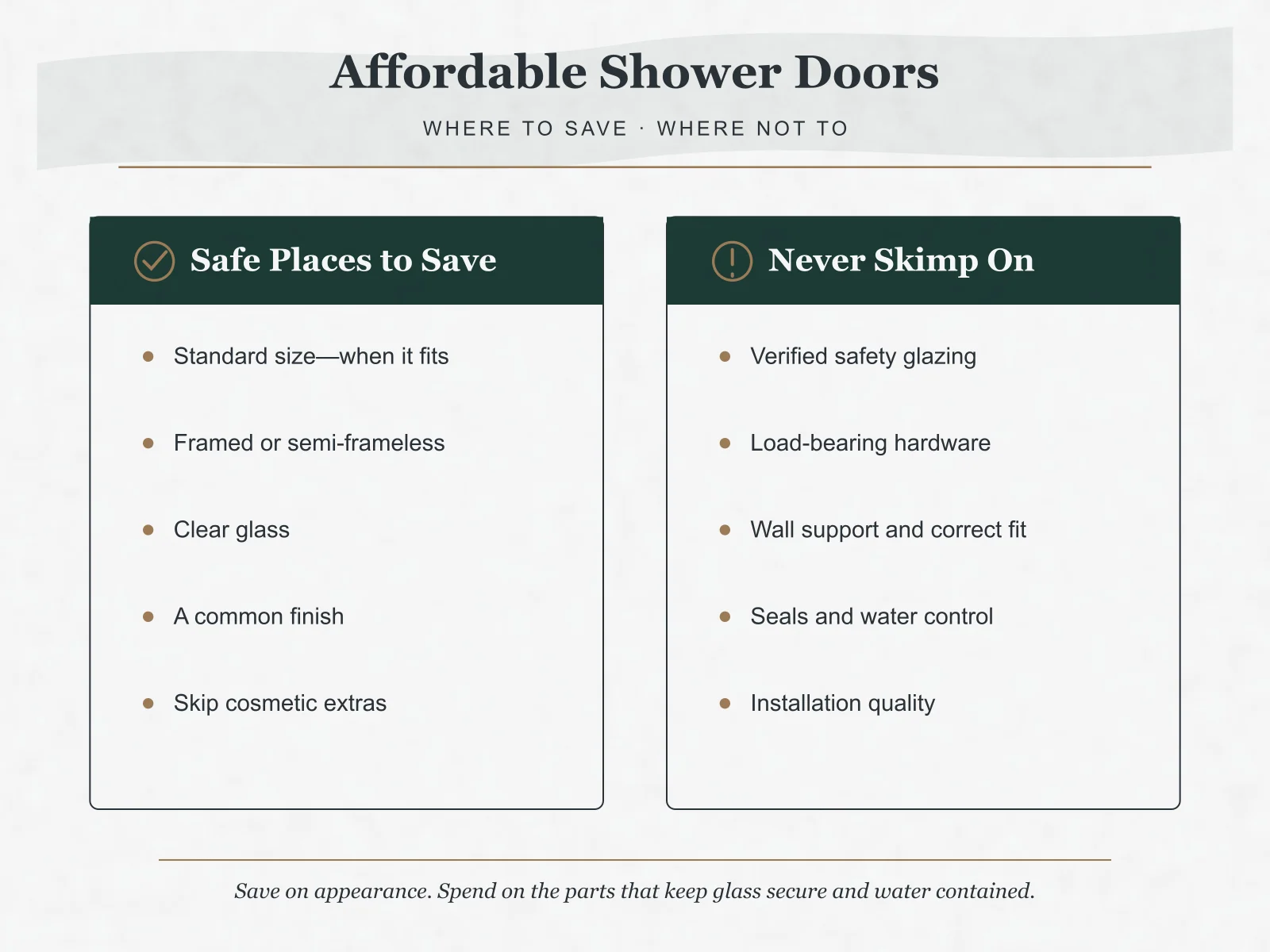
Affordable shower doors don’t have to look cheap or fail early. The key is knowing which features affect appearance and which ones protect the glass, control water, and keep the door working. You can often save by choosing a standard size, a framed or semi-frameless design, clear glass, and a common finish. You shouldn’t cut costs on safety glass, load-bearing hardware, seals, structural support, or installation quality.
That distinction matters more than price alone. A basic door with suitable materials can be a sound buy. A stylish door with weak hardware or support becomes expensive once it sags, leaks, or needs replacement parts.
This guide breaks the decision down by risk, so you can spend less without buying the same project twice.
Save on choices that mainly change the look: custom sizing, decorative glass, premium finishes, and a fully frameless profile. Spend on the parts that manage safety, weight, movement, and water. An affordable shower door should simplify the design without weakening the glass system, hardware, seals, support, or final fit.
| Decision | Usually safe to save | Where not to cut corners |
|---|---|---|
| Size | Standard retail size when it fits correctly | Forcing a stock door into an unsuitable opening |
| Frame style | Framed or semi-frameless construction | Weak framing, poor anchors, or undersized supports |
| Glass appearance | Clear glass without patterns or tint | Unverified safety glass or unsuitable thickness |
| Finish | A common chrome or brushed-nickel finish | Flimsy hinges, rollers, handles, or fasteners |
| Water control | A simpler door configuration | Missing, poorly fitted, or hard-to-replace seals |
| Installation | A straightforward system installed by a qualified person | Treating poor alignment or weak wall support as cosmetic issues |
The safest savings remove customization and decorative upgrades. They don’t alter the door’s safety rating or ask small parts to carry more weight than they were designed for. Start with the opening and the shower layout, then choose the least expensive door system that fits those conditions without modification.
Custom glass costs more because it is made for one opening. A standard-size door spreads fabrication costs across many units and may offer easier access to replacement seals or rollers. Save here only when the published fit range suits the opening. Use our shower-door measuring guide to record the finished opening before comparing sizes. Awkward filler pieces, unusual drilling, or changes to finished tile can erase the price advantage. Choose standard sizing because it fits, not because you hope it will fit.
Fully frameless doors often cost more because their look depends on heavier glass, concentrated hardware, added support, and more exact fabrication. For a family bathroom, rental, or alcove, a well-made framed bypass door can offer value. Semi-frameless is a useful middle ground when you want cleaner sightlines without the full premium. “Frameless” describes a design approach, not the quality of every component. Our frameless shower-door selection guide compares these construction types in more detail.
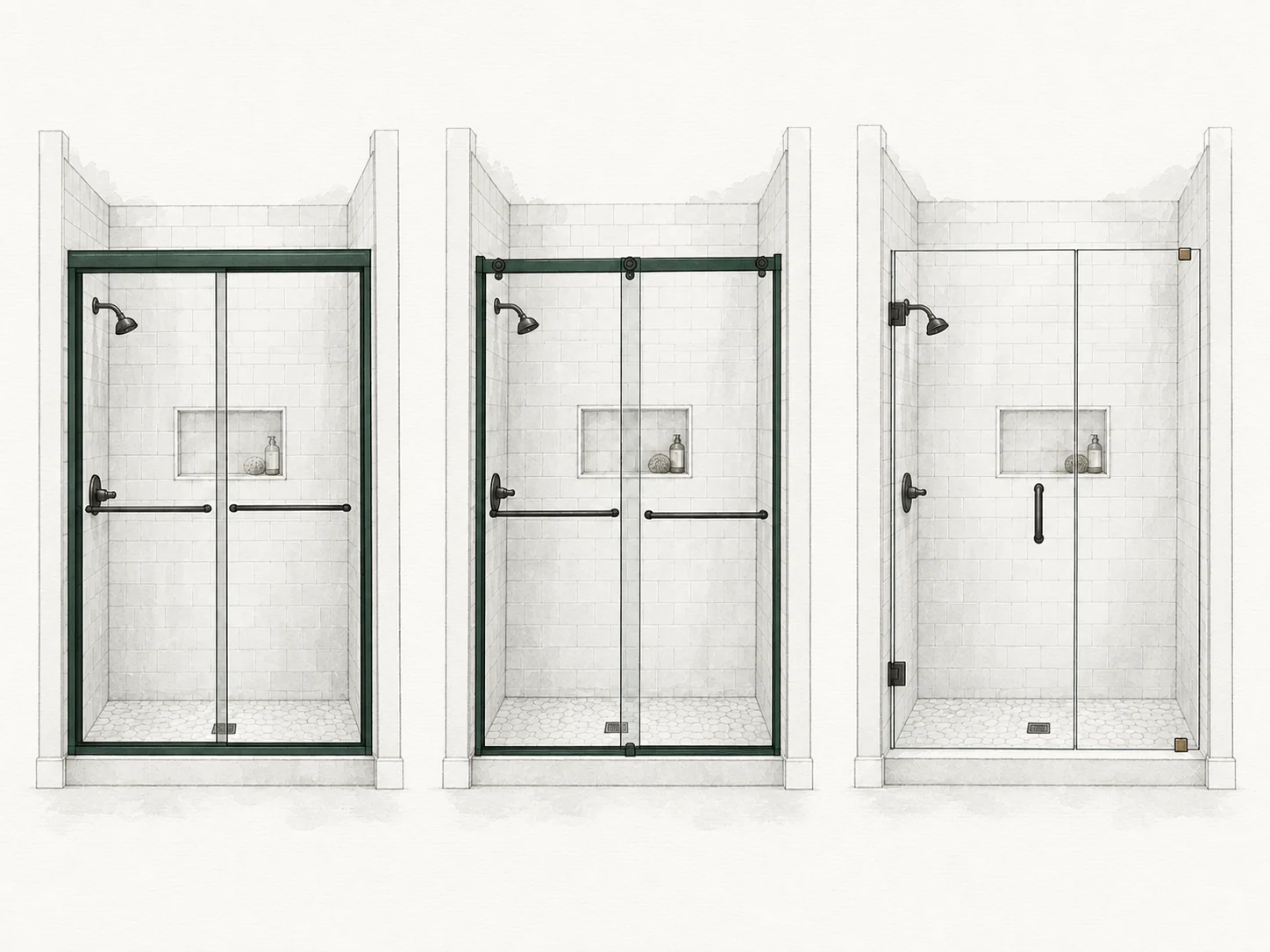
Frosting, fluting, patterns, tint, and specialty coatings aren’t required for safe daily use. Standard clear glass is widely available and usually gives you more lower-priced models to compare. It does show water spots and offers less privacy, so patterned glass may earn its premium in a shared bathroom. Otherwise, clear glass reduces cost without weakening the door. Spend on the glass specification first and its appearance second.
Chrome and common brushed finishes tend to cost less than specialty colors. Choosing the less expensive color is usually low risk; choosing a hinge or roller solely because it matches the faucet is not. Check the hardware material, relevant weight limits, warranty, and replacement-part availability. A basic finish on sound hardware beats a fashionable finish over light-duty parts.
Etched motifs, oversized handles, towel-bar upgrades, badges, and unusual colors can raise the total without improving operation or water control. Easy-clean treatments may help in hard-water areas, but only if the likely maintenance savings justify the premium. Ask whether an upgrade improves safety, access, water control, or upkeep in your home. If not, skip it. A budget door can be plain without being weak.
Don’t economize on any part whose failure could release the glass, injure someone, damage the bathroom, or make the door unusable. Safety glazing, suitable hardware, sound support, replaceable seals, and correct installation form one system. A bargain in any one of those areas can shift cost and risk to everything around it.
Shower doors and enclosures fall under the U.S. Consumer Product Safety Commission’s architectural glazing standard, 16 CFR Part 1201. Shower applications are in the higher-impact Category II group. The glass must be safety glazing made and labeled for the application, not merely glass that looks thick.
Tempered glass is common, but the permanent safety mark and the complete product specification matter more than a marketing label. Thickness also needs context. The National Glass Association’s frameless shower enclosure manual says heavy frameless enclosures typically use 3/8-inch or 1/2-inch monolithic tempered safety glass. Engineered framed or sliding systems may use thinner glass because they carry loads differently. Avoid listings with no safety standard, permanent mark, model documentation, or credible manufacturer.
Hinges carry a swinging panel at a few attachment points, while rollers and guides keep sliding glass on its path. Weak hardware may show up as play, uneven gaps, scraping, noise, corrosion, or loose fasteners—serious concerns around a heavy panel. Prioritize parts designed for the stated glass thickness and weight. Check whether rollers, guides, seals, and fasteners have model numbers and can be ordered separately. The finish is decoration; the material, load rating, and parts support are the investment.
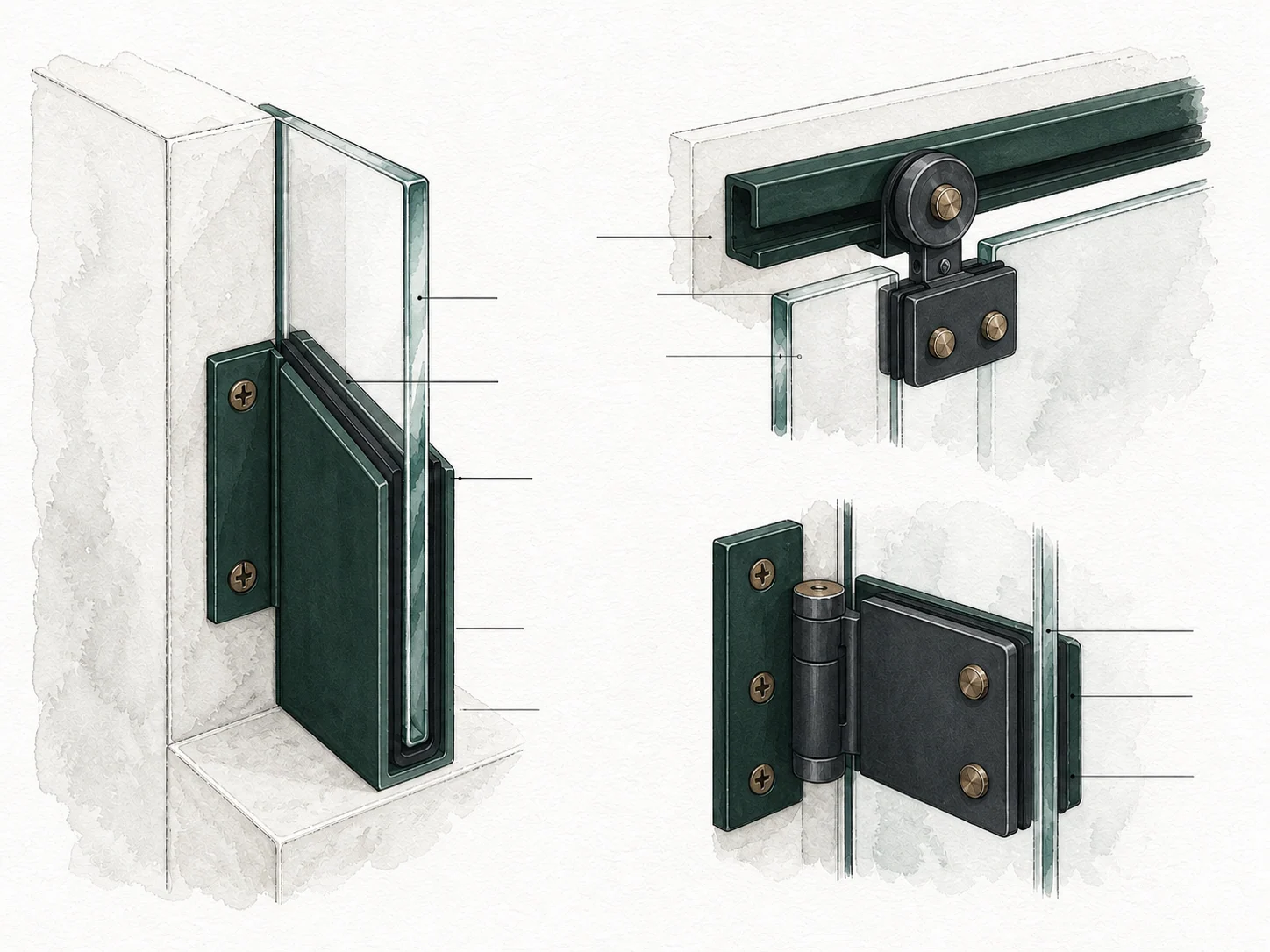
The best hinge can’t compensate for weak backing, damaged tile, or a panel configuration that asks too much of the wall. Frameless glass concentrates loads at hinges and clamps; sliding doors distribute them differently but still need secure tracks and guides. If the wall cannot accept the specified anchors or the opening is far out of square, an adjustable framed system—or correction before installation—may be the wiser budget choice. Decorative trim can hide a gap; it cannot create structural support.
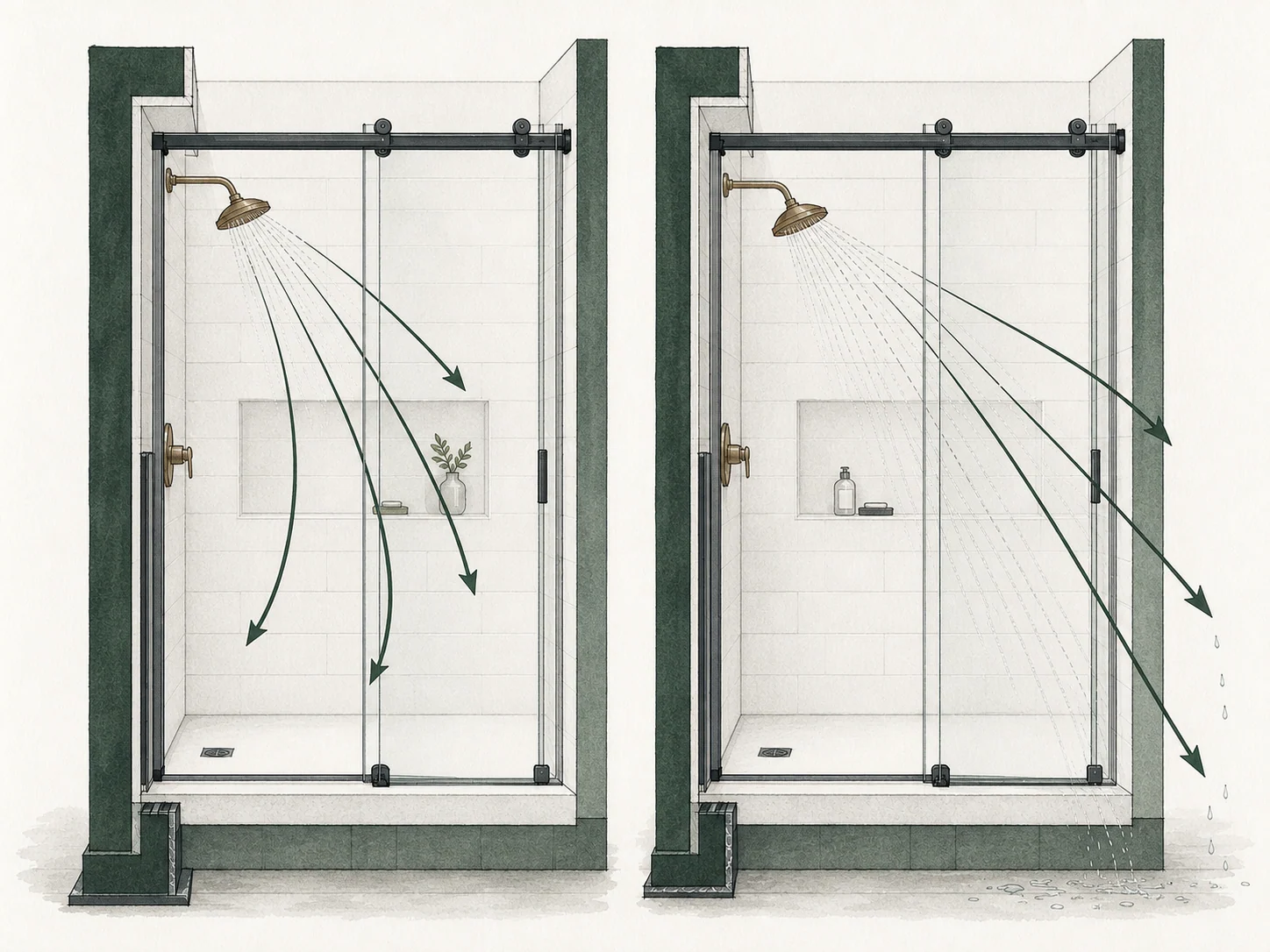
The threshold, showerhead direction, fixed panels, door swing, gaps, and seals all affect where water goes. The NGA manual notes that frameless enclosures are not watertight, so promises of a perfectly sealed glass box deserve skepticism. Check whether spray will hit a door gap and whether the required sweep, strike seal, wall seal, and guide are included. Because flexible seals wear, a common removable sweep can offer better long-term value than a proprietary part that may disappear.
Glass must be handled safely, hardware placed as specified, and the door aligned so it moves freely and manages water as intended. DIY can save labor on a basic manufacturer-approved kit when the opening suits the model and the installer has relevant experience. Heavy frameless panels, uncertain support, and unusual layouts favor a qualified installer. Compare quote scope, including removal, disposal, seals, adjustments, cleanup, and workmanship coverage; a low labor price can hide costly add-ons. See the frameless shower-door installation guide for the preparation, handling, and finishing work involved.
In April 2026, one customer paid $260 for the shower door shown below and installed it without hiring a professional. The finished enclosure supports a central point of this guide: a lower-priced stock door can still look clean and work in a finished bathroom when the buyer is willing to trade custom sizing and paid labor for a simpler product and careful work.
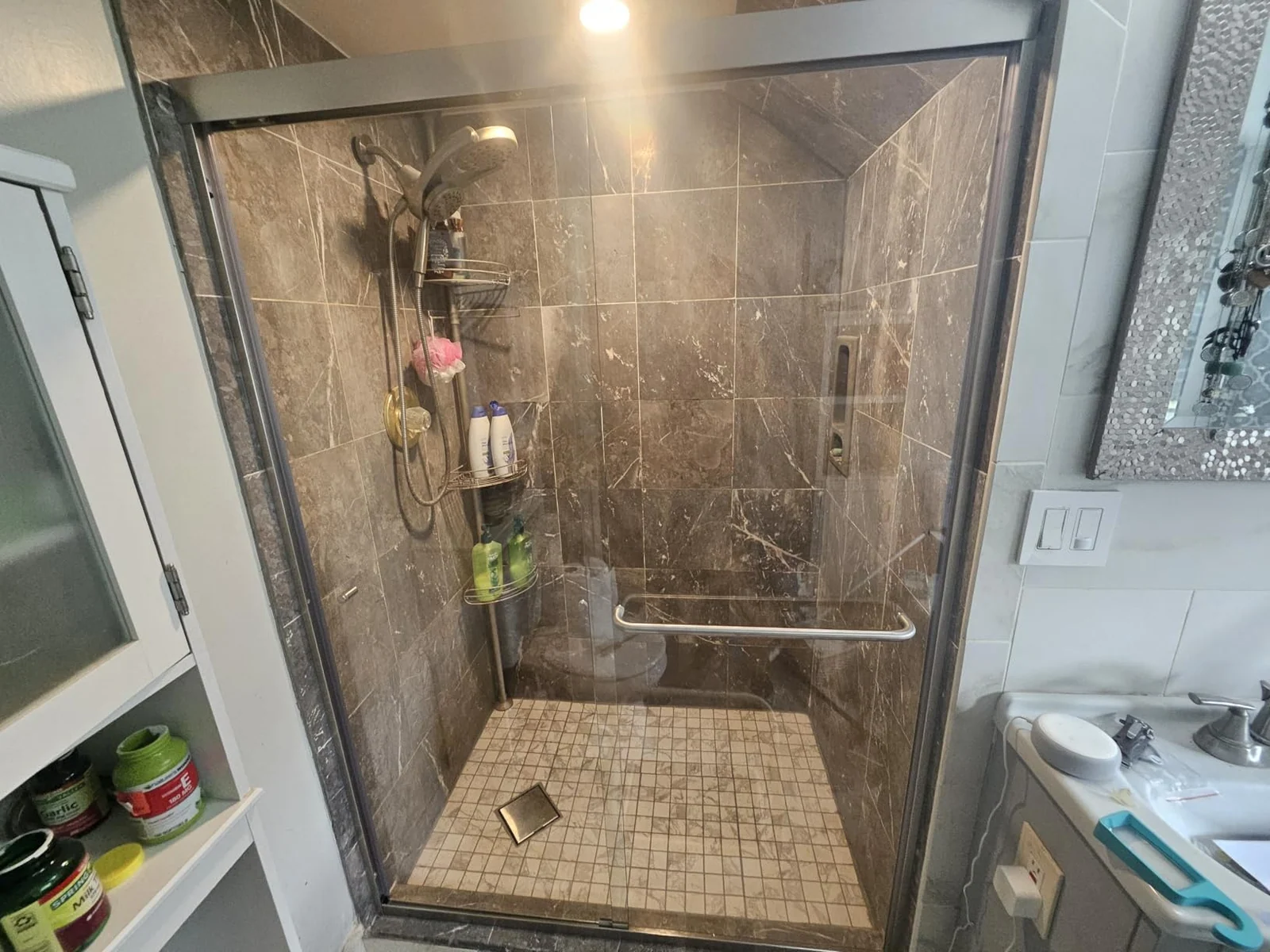
The customer described the installation as easy overall but said the cutting required patience. Their finished opening was about half an inch wider than the manufacturer’s published maximum. They still made the door fit by centering the bottom carefully beneath the corner molding and sealing the lower junction thoroughly.
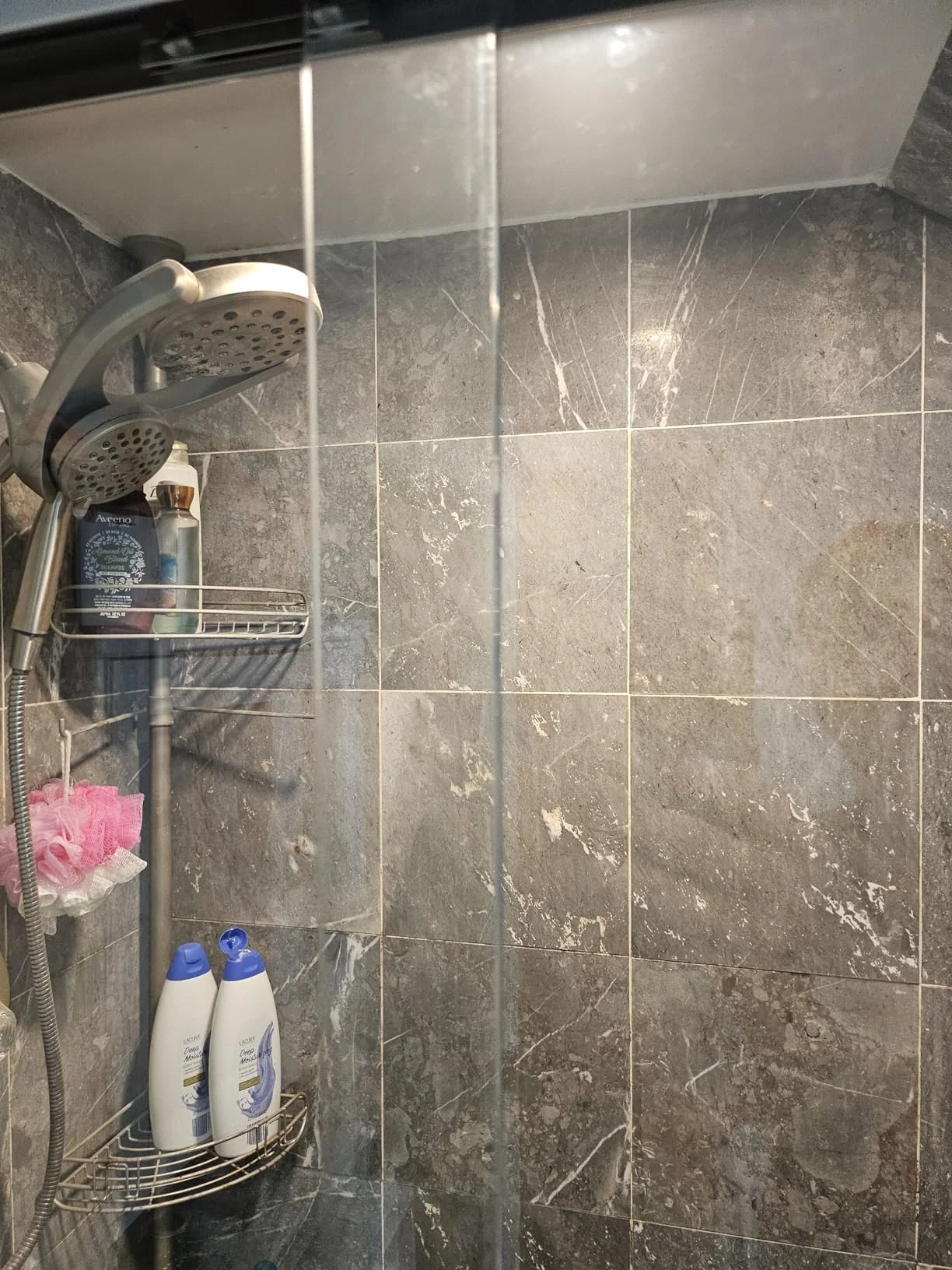
There was also a deliberate appearance tradeoff. The kit included four glass seals, but the customer installed only two on the outside edges that meet the walls when the doors close. They left the visible overlapping inside edges clear because they preferred the cleaner look, keeping the unused seals as future replacements. To prevent the moving glass from contacting the inside track when fully opened, they recommend adding small round rubber bumpers at the stopping points.
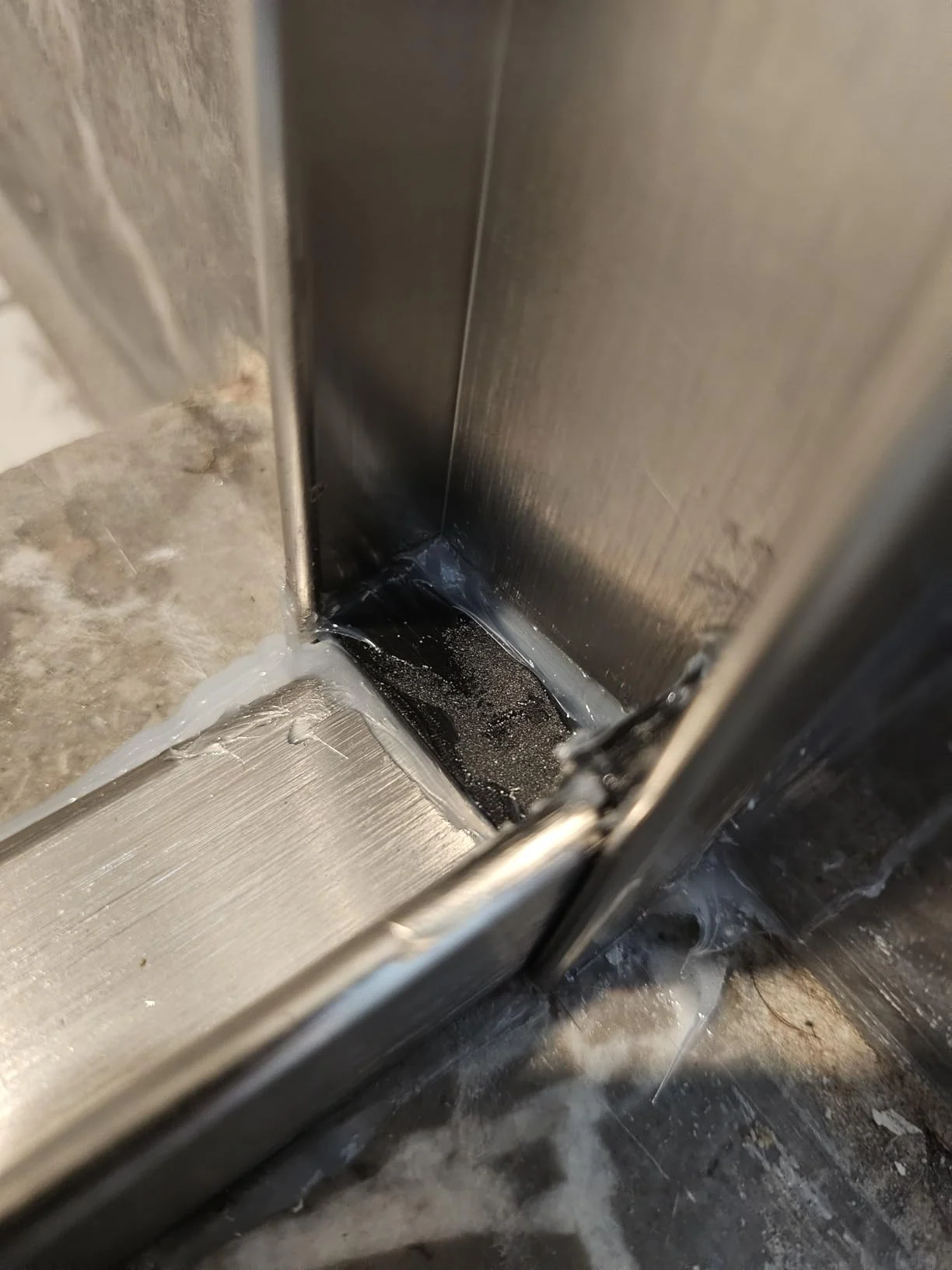
This is useful first-hand evidence, but it is not a reason to ignore a product’s fit range or omit required seals. An opening outside the stated range may reduce overlap, adjustment, stability, or warranty coverage. Seal placement can also change water control and glass-to-glass contact. Follow the manufacturer’s instructions for the exact model and confirm that every required safety and water-management part remains in place. The repeatable lesson is to save on a simple stock door and optional appearance details—not to budget around an out-of-spec opening.
An affordable door removes costly design choices while keeping the working system credible. A merely cheap door leaves basic questions unanswered: Who made the glass? Can the rollers be replaced? What supports the panel? What does the warranty cover? Price becomes useful only after those questions have acceptable answers.
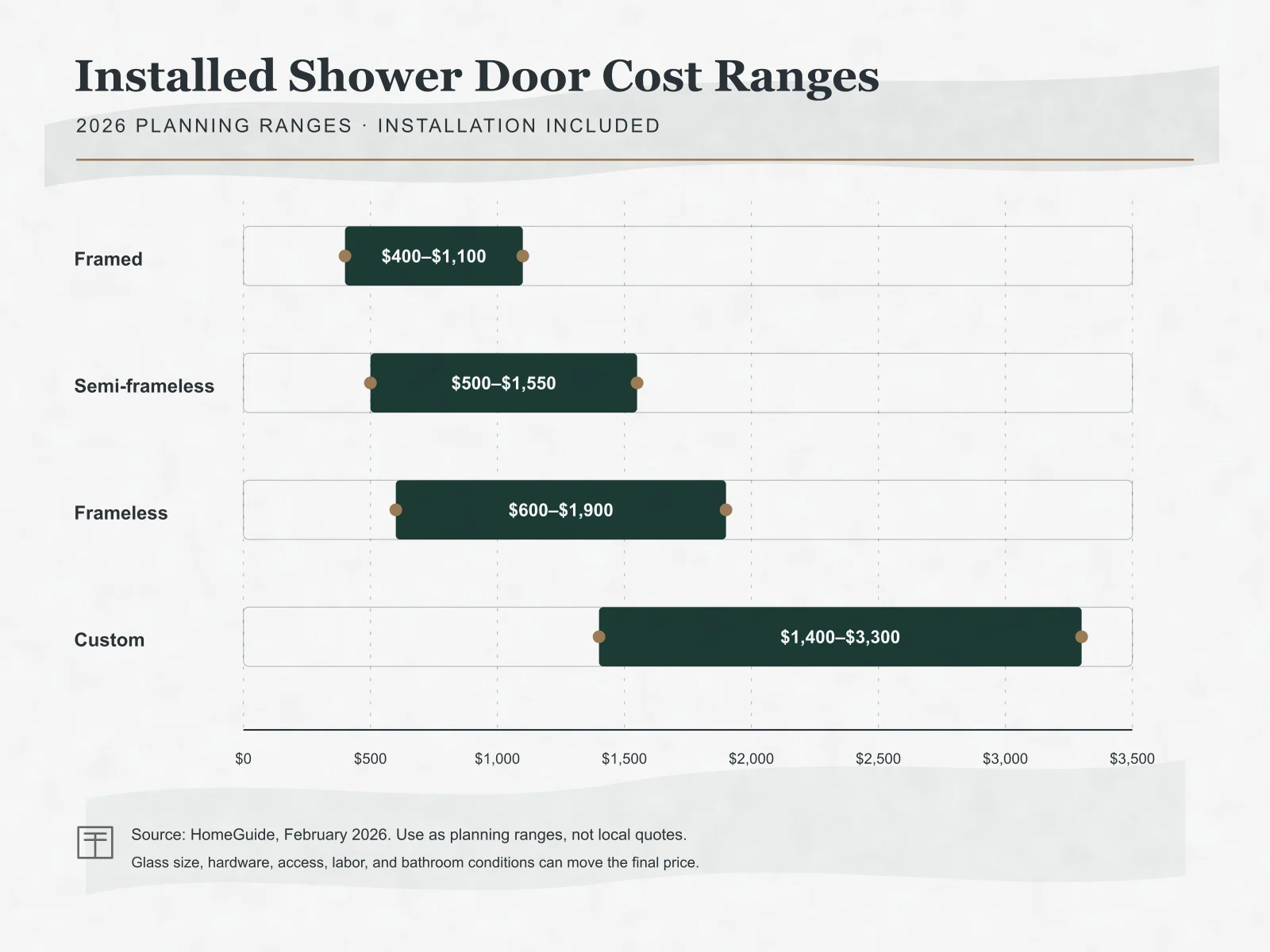
Current estimates show why like-for-like comparisons matter. HomeGuide’s February 2026 data puts installed framed doors at about $400–$1,100, semi-frameless at $500–$1,550, frameless at $600–$1,900, and custom doors at $1,400–$3,300. Door-only prices run roughly $250–$1,300, with labor often adding $150–$600. Angi’s 2026 estimates are wider in some categories, showing how glass size, labor, access, hardware, and bathroom conditions can move a project away from national averages.
| Price tier | What you may reasonably get | What to check closely |
|---|---|---|
| Lower-cost stock door | Standard dimensions, clear glass, basic finish, framed or simple sliding design | Safety marking, included seals, adjustability, parts availability |
| Mid-range door | Better hardware, semi-frameless styling, more finish choices, stronger warranty or support | Whether the added cost improves function or only appearance |
| Premium or custom enclosure | Made-to-fit glass, heavy frameless panels, specialty finishes, complex layout | Structural requirements, fabrication details, installation scope, lead time |
Use these as planning ranges, not quotes. A modest stock door can be smart; a low price becomes a warning when the seller cannot document the glass, identify the manufacturer, list what is included, or supply parts.
Pay more when an upgrade solves a condition in your bathroom or lowers a predictable ownership cost. Don’t pay simply because the option sounds premium. The best upgrade may be better rollers in a busy family bath, stronger water control near an exposed floor, or custom glass for an opening that truly cannot accept a stock door.
| Upgrade | Usually worth it when… | Usually skip it when… |
|---|---|---|
| Semi-frameless design | You want a cleaner look without the full frameless price | A framed model already suits the room and budget |
| Higher-grade hardware | The door is heavy, used often, or replacement access matters | The upgrade changes only the finish name |
| Easy-clean glass treatment | Hard water and frequent spotting create real maintenance work | The premium is high or warranty terms are vague |
| Custom sizing | The opening is unusual or stock sizes can’t fit correctly | A standard model fits without compromise |
| Privacy or patterned glass | The bathroom is shared and privacy has daily value | Clear glass works and the choice is purely decorative |
| Professional installation | Glass is heavy, support is uncertain, or the design is complex | A simple manufacturer-approved kit is safely within your skill level |
A better semi-frameless door may deliver the visual effect you want without the larger jump to a heavy-glass enclosure.
The “best” affordable shower door changes with use, layout, and maintenance needs. Match the door to the room before comparing decorative features.
| Bathroom situation | Strong value choice | Where to spend |
|---|---|---|
| Rental property | Standard framed sliding door in a common finish | Durable rollers, replaceable seals, clear parts support |
| Busy family bathroom | Framed or semi-frameless door with simple operation | Hardware durability, water control, easy-to-find wear parts |
| Small bathroom | Sliding or bypass configuration that avoids door-swing conflicts | Stable guides, usable opening width, suitable handles |
| Primary bathroom on a moderate budget | Semi-frameless clear-glass door | Better hinges or rollers and qualified installation where needed |
| Older or uneven opening | Adjustable framed system, if its fit range works | Honest assessment of the opening and wall condition |
| High-end remodel | Frameless or custom glass only when the look is a priority | Engineered support, specified hardware, fabrication, installation |
For accessibility, a lower threshold, wider clear opening, easier handle, or door without a difficult swing path can be worth more than a finish upgrade. Choose the enclosure around safe access from the start.
Use this checklist to separate a true value from an attractive listing price:
If a listing cannot answer the first six questions, don’t let a large discount rush the decision. Missing specifications are not savings.
Price alone doesn’t determine safety. A lower-cost door can be safe when it uses compliant safety glazing, suitable hardware, secure support, and the correct installation method. Avoid products with no permanent glass mark, unclear specifications, unknown manufacturers, or hardware that isn’t matched to the panel.
Any enclosure can allow water out if the showerhead sprays toward a gap, the threshold sends water the wrong way, seals are missing, or the door is poorly aligned. Frameless designs are not fully watertight by nature. Door configuration and water management matter more than a budget label.
It can be worth it when the open glass look is central to the remodel and the room can support the system correctly. It is rarely the best place to spend a tight budget. Semi-frameless doors often provide a similar visual improvement for less.
Spend enough to get documented safety glass, appropriate hardware, replaceable seals, a model that fits, and competent installation. National installed estimates commonly start around the mid-hundreds for framed doors and rise into the thousands for frameless or custom work. Local quotes are more useful than a single national average.
There is no reliable lifespan based on price tier alone. Frequency of use, hardware quality, water chemistry, cleaning products, installation, and access to replacement seals or rollers all affect service life. A simple door with obtainable parts may outlast a more expensive model that cannot be repaired.
DIY may make sense for a straightforward, manufacturer-approved framed kit when the opening is suitable and you have relevant experience. Hire a qualified installer when the glass is heavy, the enclosure is frameless, the walls or curb raise questions, or a mistake could damage finished surfaces or release the panel.
The best affordable shower door is not the one with the most features at the lowest advertised price. It is the simplest door that safely fits the opening, controls water for that layout, uses credible hardware, and can be maintained after the warranty ends.
Save on custom dimensions when a stock size fits. Choose framed or semi-frameless construction when the fully frameless look is not worth the premium. Pick clear glass and a common finish. Skip decorative extras unless they solve a daily problem.
Do not compromise on documented safety glazing, load-bearing parts, wall support, seals, alignment, or the quality of the work. Those are the parts that decide whether an inexpensive shower door remains affordable.
Use these with the exact product and room conditions behind your decision.
Your response helps us make the next guide more useful.
Loading responses…
Continue with the next decision in your bathroom project.