
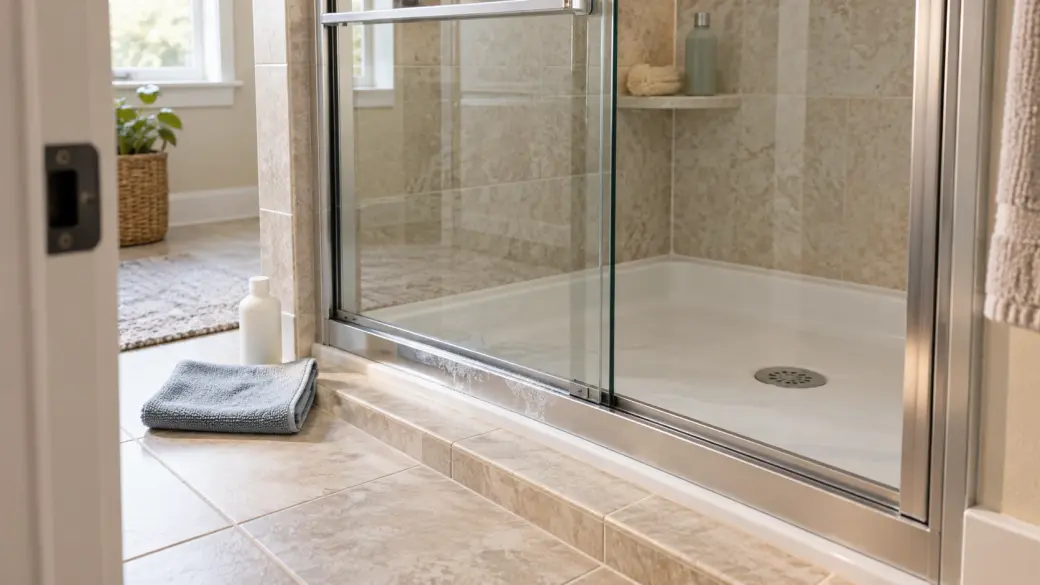
Your shower door is still on its track, but now it grinds, drags, or stops halfway across. A morning shower shouldn’t start with a wrestling match. Shower door track repair begins with a quieter task: finding out whether you’re dealing with buildup, a tired roller, or damaged metal.
Clean a dirty track that’s otherwise sound. Replace a rail when damage affects its job and you have a confirmed matching part. If the upper rail carries the glass and is bent, cracked, or loose, stop using the door until its support has been checked.
Start with your symptom below. Check the rollers, clean what you can reach, and inspect any remaining trouble spots before ordering parts.
Quick diagnosis: what’s your symptom?
- Grinds or catches at one spot → Clean accessible debris, then inspect that section.
- Door drifts open on its own → Check level.
- Roller wobbles or doesn’t spin → Check roller replacement.
- Rail looks bent or moves when pushed → Stop use and check the support.
Before shower door track replacement: rule out the rollers
A squeak can get your attention without earning a new rail. Before deciding on shower door track replacement, grab a flashlight and look at the track, wheels, and bottom guide. You want to see what’s rubbing, what’s wobbling, and what has stopped turning.
Find the part that carries the glass
On a top-hung slider, the upper rollers and header carry the moving glass. The bottom guide keeps the panel on its path, and the lower strip may also keep water inside the shower. Think of the lower guide as a lane marker: it steers the panel, while the upper assembly does the heavy lifting.
Kohler’s component and assembly drawings show that arrangement in one specific system. Other doors need their own parts drawing. Seeing a wheel below the glass doesn’t tell you whether that wheel carries weight.
If a suitcase wheel locks up, polishing the airport floor won’t make it roll. The same logic applies here: replacing the lower strip won’t fix a failed upper roller.
If the panel has left its proper roller path or bottom guide, use our sliding shower door off-track guide. The checks below are for a door that is still correctly engaged but has become difficult to move.
Use the sticking pattern as a clue
Pay attention to where the door complains. If it catches at the same spot each time, inspect that stretch of rail and the nearby guide. If a wheel skids instead of turning, look at its rolling surface and axle.
Debris, a dent, and a rubbing guide can interrupt travel in the same place, so a sticking pattern alone won’t tell you which part to buy.
| Observation | Next check | Next action |
|---|---|---|
| Catches at the same rail location | Local debris, dent, or guide obstruction | Clean, then reassess |
| Wheel wobbles or does not turn | Roller condition and attachment | Confirm the faulty component |
| Clean door drifts open | Assembly level and alignment | Assess alignment before replacing parts |
| Header or attachments move | Support and connections | Stop use and arrange inspection |
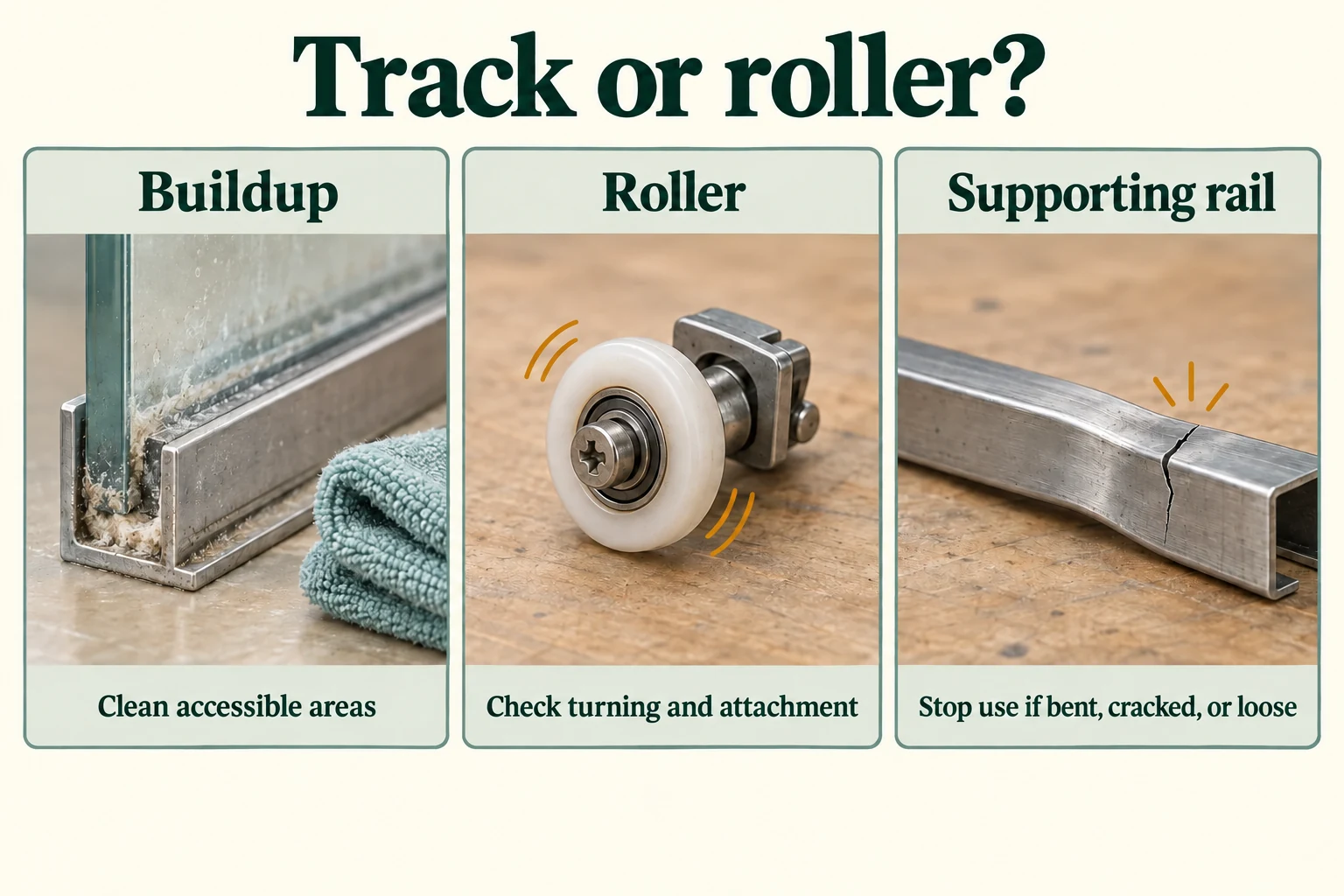
If the panel and its supports look sound, move it gently and stop at resistance. Don’t turn a sticking test into a strength test. Kohler’s troubleshooting separates track debris, worn or loose rollers, and guide rubbing. Our roller and bottom-guide replacement checks explain the wheel decision in more detail.
Shower door track cleaning without damaging the finish
For shower door track cleaning, start with warm water, mild detergent, and a nonabrasive cloth. The goal is to lift the mess off the finish, not take the finish off with the mess. A cleaner made for glass may be unsuitable for the metal right beside it.
Remove soap film and loose debris first
Keep the panel securely installed and clean what you can reach. If reaching a channel means removing glass or retaining hardware, leave that access work to someone equipped to handle the panel. A cloth should lead this job, not a pry bar.
- Pick up loose hair and debris with a damp cloth.
- Wipe accessible channels and guide corners with diluted mild detergent and a nonabrasive cloth.
- Rinse with clean water and dry, repeating a gentle wipe where soap film remains.
- Clear visible loose debris from existing drainage openings without enlarging or sealing them.
- Gently reassess travel once dry, stopping if the panel still binds.
Delta’s care guide calls for mild cleaning, soft materials, and rinsing. Give a stubborn patch another gentle pass rather than reaching straight for something harsher.
Keep the drainage layout shown in your installation drawing. Delta’s 2016 Contemporary instructions, for example, leave a specified bottom-track overhang unsealed. A neat-looking bead of sealant in the wrong place can undo the intended drainage layout.
Treat hard-water scale separately
Soap film may wipe away while a hard crust stays put. Before trying a stronger cleaner, check what the metal finish and nearby seals can tolerate. Ask the manufacturer which descaler is approved, how to dilute it, how long to leave it on, and how to rinse it off.
For deposits on the glass itself, see removing hard-water stains from shower-door glass. Keep the track’s finish-specific care separate.
Vinegar doesn’t get a free pass because it lives in the kitchen. The STERLING metal-care instructions, covering anodized aluminum, prohibit acids, alcohol, solvents, and abrasive tools. They also warn against leaving cleaners soaking on the surface. That rules out a vinegar-soaked track for the finish covered by those instructions.
A small test patch doesn’t overrule a banned ingredient. If there’s no approved descaler, stay with gentle cleaning and ask for service advice. After showers, dry the hardware to limit fresh deposits. Apply lubricant only where the hardware instructions call for it; spraying everything is not a diagnosis.
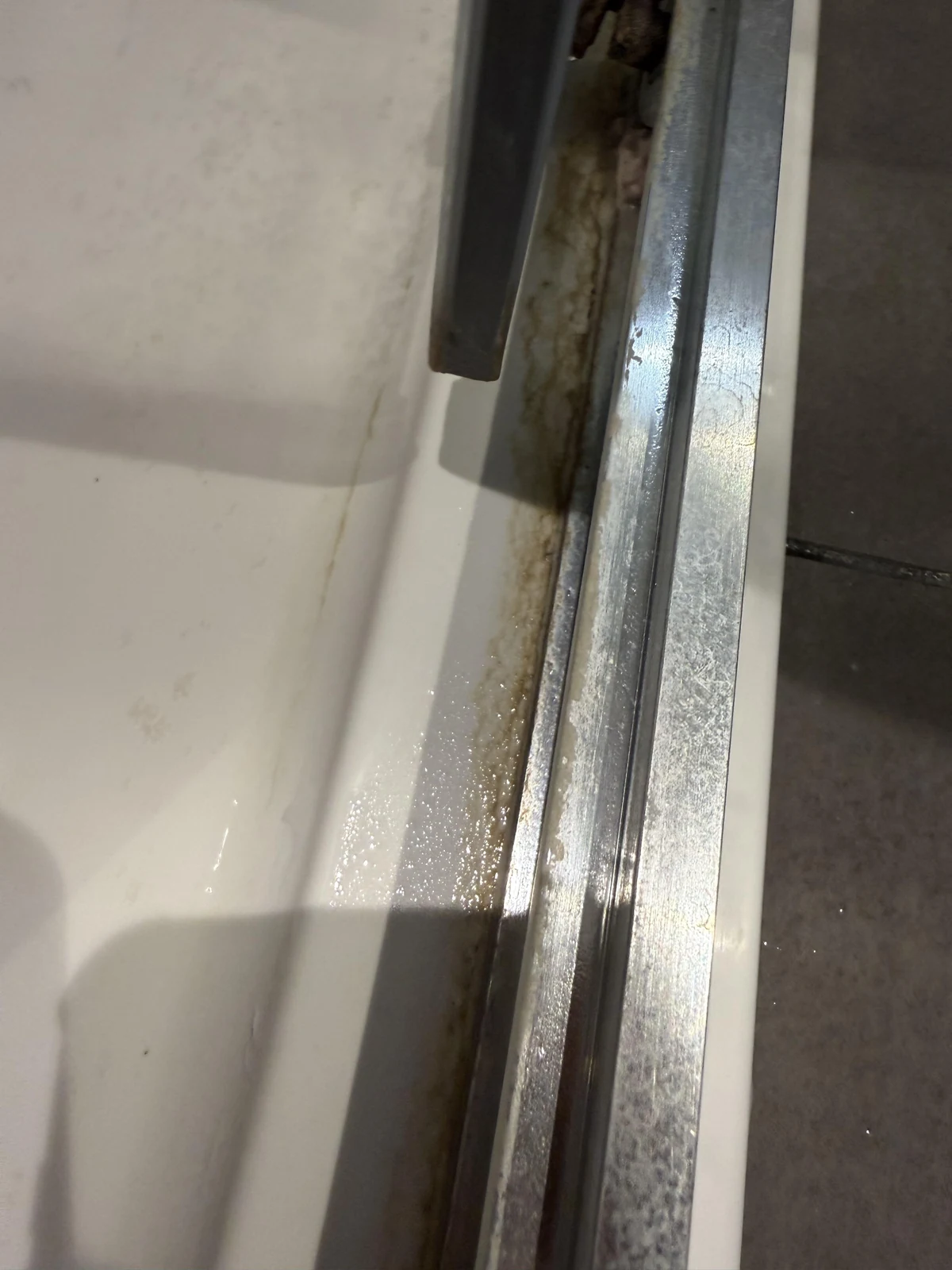
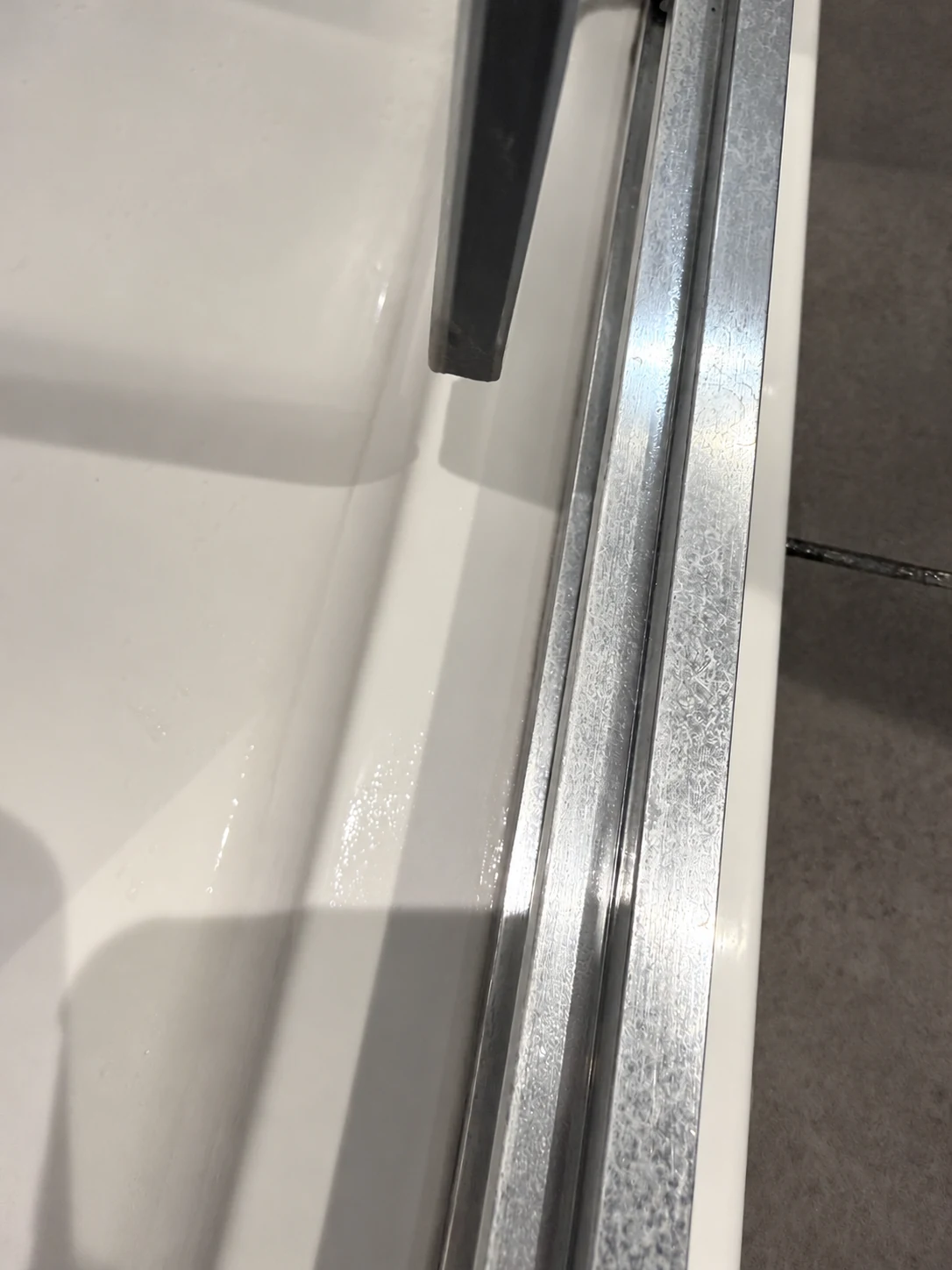
Repair case: cleaning and roller lubrication resolved the symptoms
In the repair shown here, the door was noisy and difficult to slide. The person who supplied the photos removed buildup with a cleaning solution, wiped the track area, and lubricated the rollers. They reported that both symptoms stopped afterward.
Because cleaning and lubrication happened together, the result doesn’t tell us that cleaning alone would have fixed it. It does give you a reason to check the dirt and wheels before ordering a new rail. Choose cleaning and lubrication products that suit your finish and hardware.
When to replace a shower door track
Before you replace shower door track components, inspect the cleaned metal. You’re looking for damage that changes how the rail guides, connects, or supports the door. A stained surface and a failed part call for different decisions.
Check bends with a straightedge, then check level
Look along the rail with light coming from the side. Check for dents, twists, cracks, or a crushed channel lip. Take photos of anything suspicious without pressing on it.
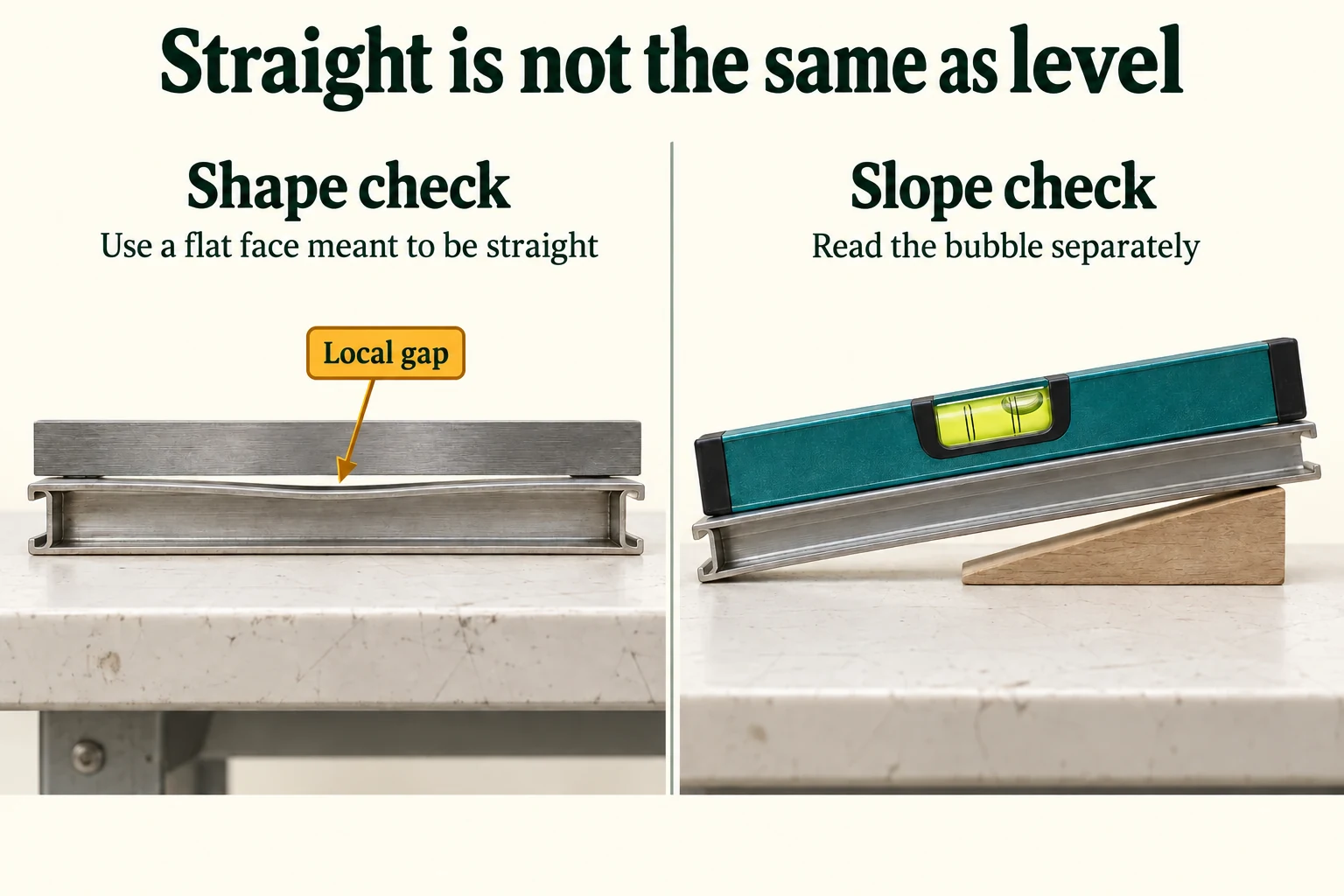
For a basic shape check, gently place a straightedge against an accessible flat face that is meant to be straight. A bubble level can serve as that straightedge. Local gaps or rocking suggest a bend worth inspecting.
Then read the bubble to check slope. Those are two separate checks. A rail can be straight but tilted; it can also have a local bend while the bubble reads level. Delta’s drift-open guidance identifies an unlevel enclosure or sill as a possible reason a closed door rolls open again.
Keep the tool clear of glass edges, and don’t apply this check to a track designed to curve. There’s no universal millimeter cutoff here. If a small gap leaves you unsure, send the photos to an installer rather than treating the straightedge as a verdict.
Separate cosmetic damage from functional failure
Discoloration alone doesn’t put a track on the replacement list. Check its working surfaces and connections for pitting, flaking, or cracks. If a rough surface still catches the roller after cleaning, that’s functional damage, even if the rail merely looks discolored from across the room.
Replace a bottom rail when damage affects the guide mounting, channel shape, or water containment. First make sure the broken piece isn’t a plastic guide you can replace separately. A straight, intact lower strip that has come loose may need its mounting or sealant restored.
Customer examples: bottom tracks crushed during installation
These customer photos show bottom tracks that were crushed during installation. The damaged tracks could not be installed, so replacement parts had to be supplied.
Cleaning won’t restore a crushed channel. For the replacement, confirm the model, profile, channels, and connections rather than ordering a similar-looking strip of metal.
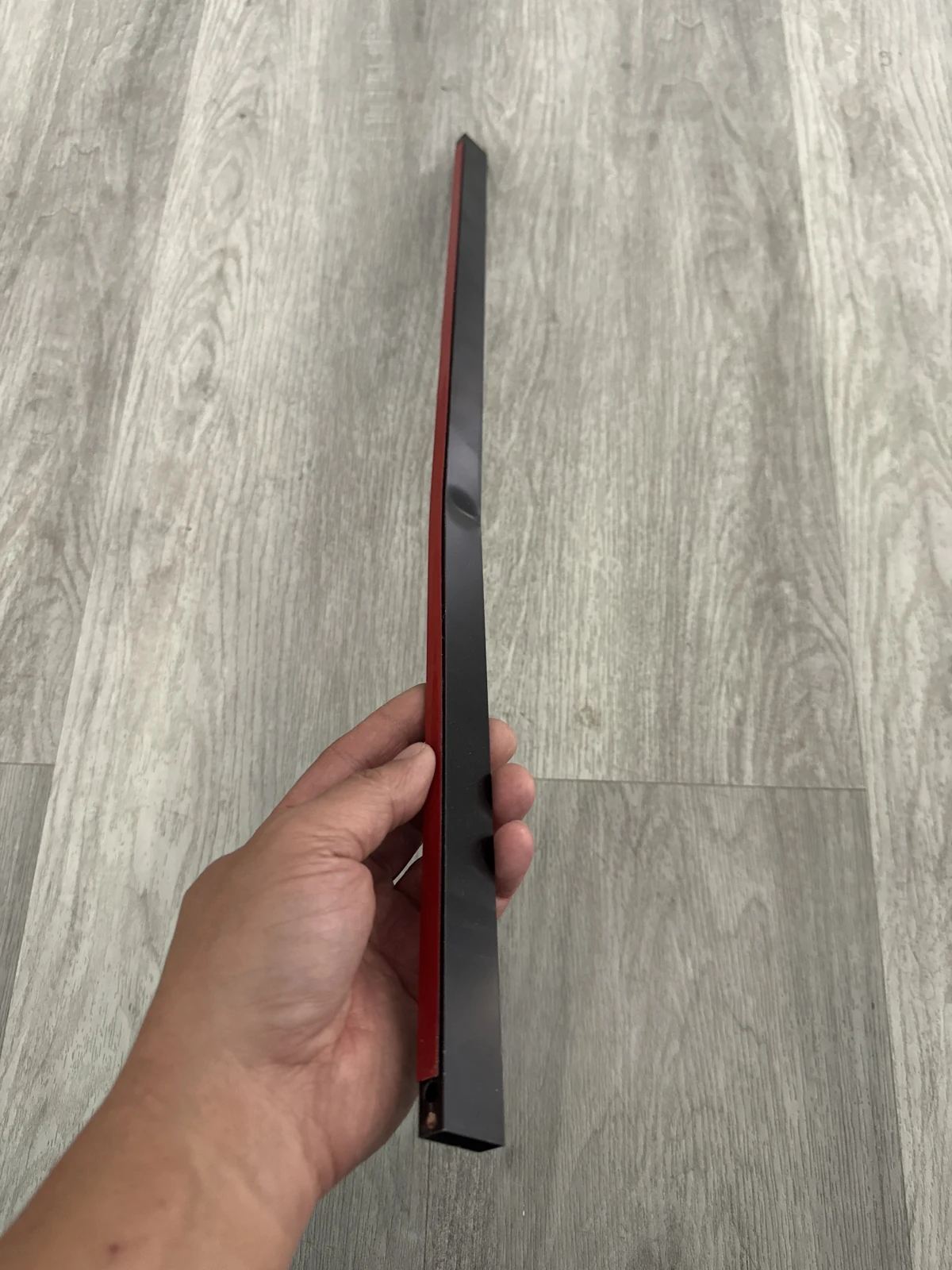
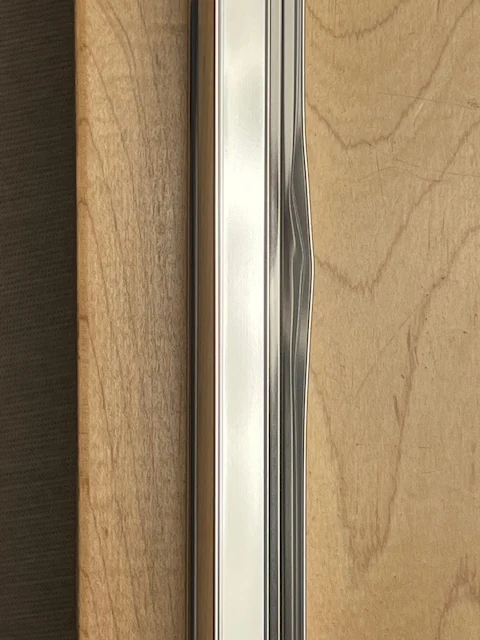
A bent or cracked upper rail that carries the glass needs a stop-use assessment of both the rail and its supports. Don’t hammer it straight with glass hanging from it, and don’t treat filler as a structural repair.
Cracked glass, damaged glass edges, hard contact between glass and metal, or moving attachments also mean stop. Kohler’s safety warnings call for damaged or loose parts to be checked and hard objects to be kept away from glass edges. The replacement advice here follows those safety concerns.
If the track is too badly deformed to reuse, first check whether a matched replacement rail can restore the enclosure. If that part is unavailable or damage extends to the frame and supports, use the repair-versus-replacement cost comparison to compare the complete repair with a new door. Failed supports need repair whichever option you choose.
Shower door track replacement: match the part and compare costs
If the rest of the enclosure is sound, replacing one rail may be enough. Confirm that a matching part is available, then compare the complete repair quote with the cost of a new door.
Match the model and profile before ordering
Start with the brand, model, parts diagram, and installation-guide revision. Delta’s Contemporary replacement top track fits its March 2016 system and specifically excludes newer versions. Same series name, different fit.
Matching a rail by length and finish is like buying shoes by color. You’ve narrowed the look, but you haven’t established the fit. Compare the section shape, the channels, and the hardware that connects to it.
| Detail | Send or request |
|---|---|
| Identity | Model, manual revision, track location, finish |
| Dimensions | Installed length, profile width/height, accessible channel measurements |
| Interfaces | Roller, guide, wall-jamb, stop, and retainer arrangement |
| Confirmation | Part number, section drawing, compatible revisions, included hardware, cutting instructions |
Use an existing end photo or the manufacturer’s cross-section drawing. Don’t dismantle a supporting rail just to get a better picture. Before ordering, have the supplier confirm compatibility in writing, including the part number, supplied hardware, and any cutting instructions.

What replacing a track actually involves
The rail may be one line on the parts list, but changing it can involve much of the door. Glass handling, wall-jamb removal, and resealing belong in the job scope if the assembly requires them.
Have the installer confirm the part and removal order, handle the glass safely, release the affected rail, and prepare the mounting surface. Cut only where the installation instructions allow cuts, and only to the specified length. Then restore the mounts, guides, retaining hardware, seals, and specified drainage path.
Follow the sealant’s curing instructions, then check full travel and water containment before reuse. The linked Delta installation manual has distinct cutting and sealing details. Our sliding shower door installation guide covers the broader sequence; this overview doesn’t supply universal removal steps or cutting allowances.
Compare the complete repair quote with a new door
Delta listed its Traditional October 2022 bottom track at $29.99 and Traditional top track at $64.99 (checked October 8, 2026). These are specific part-only price snapshots; the viewed selections displayed sold-out messaging. Confirm current price and availability before ordering.
A small part price can sit at the top of a much larger bill. Ask for the whole repair: delivery, glass handling, any components disturbed during the work, resealing, and final checks. Compare that with a complete new-door quote covering removal, disposal, installation, and necessary mounting repairs.
Repair the rail when it restores an otherwise sound enclosure and saves enough to make sense. If compatible parts are unavailable, several assemblies are damaged, or the quote approaches the cost of a suitable new system, consider replacing more of the enclosure. Failed wall support still needs fixing whichever option you choose.
Our shower door repair-versus-replacement cost guide covers the wider budget decision. There isn’t a universal percentage that makes the call for you. Compare equal scopes, not a loose rail in a box with a fully installed door.
For shower door track repair, let the fault set the scope: clean sound metal, replace the damaged part with a confirmed match, and get structural damage assessed before reuse. You don’t need to buy a whole new door just because the old one has started complaining.
Before contacting a supplier, use the track-matching checklist to record your model revision, dimensions, and connected hardware. Ask for written compatibility confirmation before placing the order.
Frequently asked questions
Still deciding whether to clean the track or order a part? These are the checks to make first.
What causes a shower door to stick while still on its track?
Buildup, worn or loose rollers, guide contact, and damaged or misaligned rails can all cause sticking. Note where it catches and whether the wheels turn, then clean accessible areas before choosing a replacement part.
How do you clean a shower door track without damaging the finish?
Use mild detergent, warm water, and a nonabrasive cloth on accessible areas, then rinse and dry. For scale left behind, use only a descaler approved for that finish and nearby seals.
When should a shower door track be replaced?
Replace it when damage affects the roller path, guide attachment, channel, or water containment. A bent or cracked rail that carries the glass needs a stop-use assessment. Staining alone doesn’t establish failure; if the track is sound but water escapes, check the seals and drainage separately.
How do you match a replacement track to an existing shower door?
Match the model revision, profile, dimensions, and connected hardware, then get the supplier’s compatibility confirmation in writing. Length and finish help identify a part, but they cannot establish fit on their own.
Sources to check
Use these with the exact product and room conditions behind your decision.
- KOHLER Sliding Shower Door Installation Instructions (1572091-2-D)PDF pp. 3 and 39: glass/parts safety and roller, guide and track-debris troubleshooting.
- STERLING Neo-Angle Shower Door Homeowners Guide (2375 Series, 1100676-5-D)PDF p. 2: glass and anodized-aluminum care, metal-finish cleaner restrictions and rinsing.
- Delta Contemporary Style Shower and Bathtub Doors Installation Guide (March 2016)File: DOC_SWD_INSTALL_CONTEMPORARY_SLIDE.pdf. PDF p. 36, step 50: the specified bottom-track overhang remains unsealed.